
Actionable Customer Insights: A Prioritization Framework
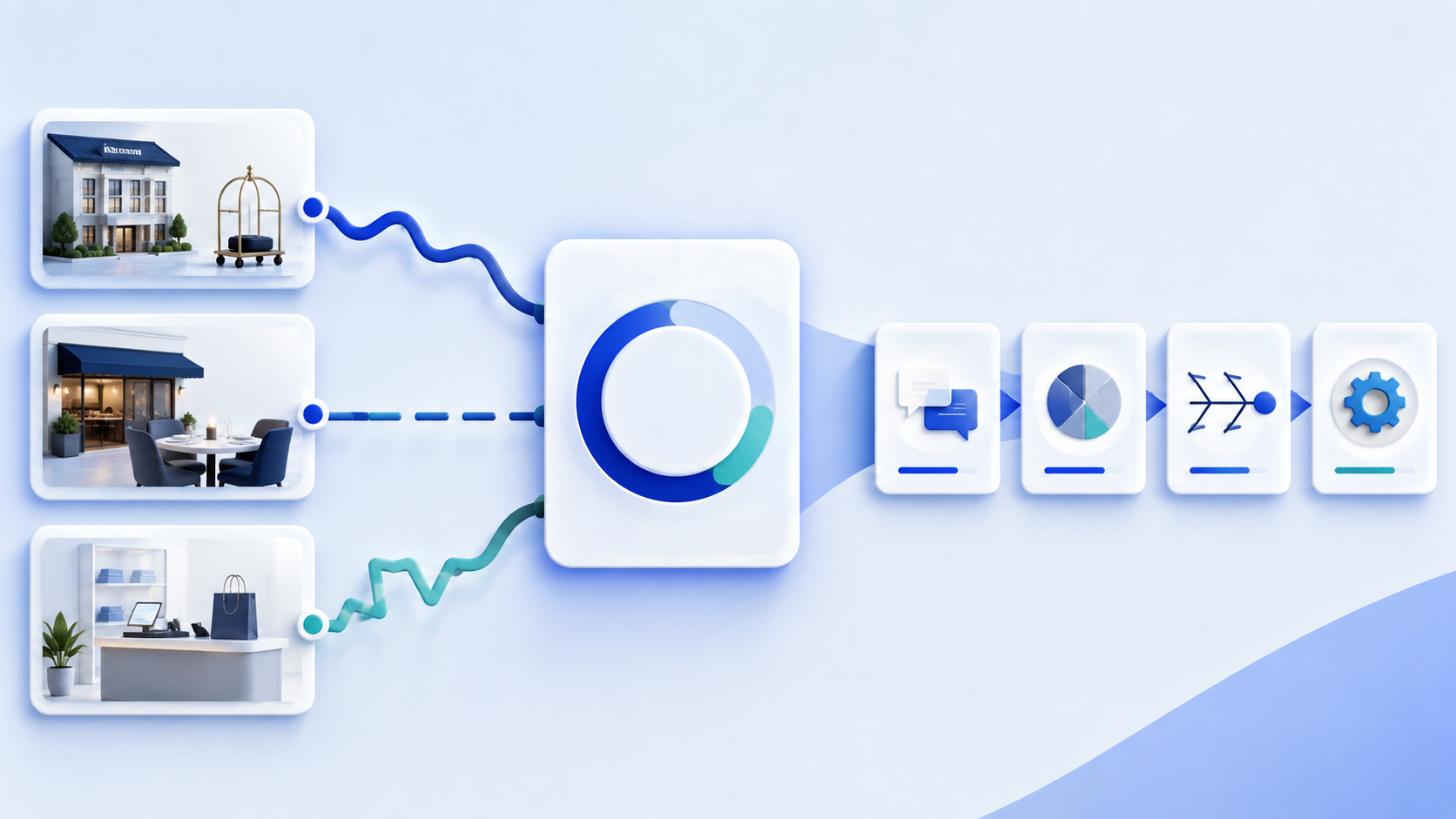
Most companies have plenty of customer feedback: surveys, reviews, support conversations, market research, transaction data, and frontline observations. The harder problem is turning that volume into actionable customer insights.
“Customers dislike wait times” is an observation. A useful insight explains where the issue appears in the customer journey, which customer segments are affected, why it happens, what customer behavior it changes, and what leaders should do next. That is the difference between customer data and decision-ready intelligence.
What Are Actionable Customer Insights?
Actionable insights contain enough evidence and context to support a decision.
Compare:
Feedback: “Checkout took too long.”
Theme: “Customers frequently mention checkout delays.”
Actionable insight: “Checkout complaints cluster at high-volume locations during evening shifts, where associates report that loyalty enrollment adds several steps to the transaction.”
The third statement gives leadership somewhere to act. It connects customer experience to a touchpoint and likely cause, then gives teams a hypothesis to test against CSAT, NPS, customer satisfaction, and conversion.
Strong consumer insights use both quantitative data and qualitative data. Scores reveal patterns; conversations explain them. The CDC’s guidance on collecting and analyzing qualitative data highlights open-ended inquiry for understanding context and why a program may not be working.
Why Most Customer Feedback Never Becomes Actionable
The failure usually happens after collection.
Customer service data, purchase history, and customer research live in separate systems. Teams report averages instead of location variance. Customer journey mapping shows the path but not the operating cause, while data visualization can show trends without explaining how to solve them.
Other gaps include no owner, weak data quality, incomplete demographics, themes without evidence, or findings disconnected from business strategy.
The 5 Elements of an Actionable Customer Insight
Every insight should answer five questions:
- What is happening?
- Where and for whom is it happening?
- Why is it happening?
- What business outcome does it affect?
- What can we do about it?
Preserve the evidence behind each answer. If customer satisfaction falls at one hotel, leaders should know the customer segment, shift, or touchpoint involved; relevant customer preferences; and what employees say created the problem.
“Room readiness is an issue” is a theme.
“Late-arrival guests at two properties report failures because booking preferences and arrival updates are not reaching the property team” is customer intelligence.
A Framework for Prioritizing Customer Insights
Score each potential priority across five dimensions:
1. Prevalence
How often does the issue occur across customers, locations, or customer segments?
2. Severity
How damaging is the customer experience when it occurs?
3. Business Impact
Does it affect revenue, conversion, customer loyalty, customer retention, customer engagement, labor efficiency, or reducing churn?
4. Fixability
Can the organization realistically change the process, policy, training, product development decision, marketing campaigns, or targeted marketing campaigns behind it?
5. Evidence Strength
How confident are we that the root cause is real rather than a plausible story built from a few comments?
A common scorecard supports data-driven decisions and prevents a customer insights strategy from becoming a contest over the most memorable anecdote.
Prevalence Alone Can Be Misleading
The most common complaint is not automatically the most important.
Imagine a restaurant group where slow drink refills appear frequently, but guests still return and spend normally. A less common issue, an allergy-handling failure, broken payment flow, or reservation error, may affect fewer guests but carry much greater revenue or reputational risk.
A frequent complaint can also be low severity. Leaders should weigh prevalence against impact and evidence.
That is why AI thematic analysis becomes more useful when it connects themes to root causes, affected groups, and recommended actions rather than simply counting topics.
Combine Customer Voice With Frontline Intelligence
Customers can explain what they experienced, how it felt, and what they expected.
Frontline employees can often explain which process created the issue, how often it occurs, and what might fix it.
Customer: “My room wasn’t ready.”
Frontline: “Booking preferences and arrival times aren’t consistently reaching the property team.”
Together, those signals move customer research from symptom to root cause.
Arbor is built around this connection: customer and frontline conversations can be synthesized into themes, evidence, root causes, and actions. Arbor’s guide to anonymous frontline feedback explains why the people closest to the work add critical operational context.
Preserve Context When Analyzing Customer Feedback
Do not flatten qualitative data into one enterprise-wide theme.
Preserve location, time or shift, channel, visit type, employee role, initiative, supporting conversation, customer segments, and relevant demographics.
This matters in multi-location businesses because the same customer journey can break for different reasons. A low CSAT score at one location may be staffing-related; elsewhere, the same score may come from a system handoff.
Customer journey mapping should preserve that variance instead of averaging it away.
AHRQ’s research on patient narrative feedback also shows how structured open-ended prompts can produce detailed, actionable narratives rather than generic comments.
Turn Insights Into an Executive Action List
For each priority, give leadership a short decision packet:
Finding: What is happening?
Evidence: How strong is the signal?
Root Cause: Why is it happening?
Business Impact: Why should leadership care?
Recommended Action: What should happen next?
Owner: Who is accountable?
Success Metric: How will the company know it worked?
Match the metric to the hypothesis.
If the issue is loyalty enrollment friction, watch enrollment conversion and transaction time. If the finding concerns customer preferences, compare customer behavior before and after the change. If the priority is a targeted marketing campaign, track the relevant customer segments instead of an enterprise average.
This is where measuring playbook adoption across locations matters: the question is not whether a change was announced, but whether it became consistent behavior and moved the intended KPIs.
Close the Loop and Measure Whether the Fix Worked
Make the change, keep collecting customer feedback, compare before and after, and watch the affected locations or segments.
If customer satisfaction and operating metrics improve while complaints decline, that’s a strong sign the identified root cause was correct.
If the signal persists, revisit the diagnosis.
That feedback loop applies to marketing campaigns, product development, service changes, and retention programs. It turns actionable insights into a learning system rather than a one-time report.
From Research Project to Continuous Intelligence
Traditional market research often answers one question at one moment. Multi-location operators face changing conditions every week.
A useful customer insights strategy must move continuously from:
Conversation → Evidence → Root Cause → Priority → Action → Measurement
Artificial intelligence and machine learning can accelerate analyzing data across open-ended feedback, but speed is not enough.
AI findings still need evidence, data quality, and human review. Organizations should also apply appropriate data privacy, consent, and access controls when collecting and analyzing customer information.
Final Thoughts
The difference between customer feedback and actionable customer insights is decision readiness.
The strongest insight explains the context, evidence, root cause, business relevance, and next move, not merely what customers said.
For complex customer experiences, combine customer conversations, frontline knowledge, quantitative signals, and operational context. That is how teams move from consumer insight to action.
FAQs
Q: What are actionable customer insights?
They are evidence-backed findings that explain what is happening, why it matters, and what action should follow.
Q: How do you turn customer feedback into actionable insights?
Organize feedback by journey stage, location, segment, and channel; validate root causes; connect findings to KPIs; then prioritize by prevalence, severity, impact, fixability, and evidence strength.
Q: What makes a customer insight actionable?
It is specific, evidence-based, tied to an owner and business outcome, and paired with a measurable next step.
Q: How should customer insights be prioritized?
Use a consistent scoring model for prevalence, severity, business impact, fixability, and evidence strength.
Q: What is the difference between customer data and customer insights?
Customer data is the raw input; transactions, purchase history, CSAT, NPS, and comments. Customer insights interpret those inputs to support a decision.
Q: How can AI generate actionable customer insights?
Artificial intelligence can classify conversations and synthesize patterns at scale. Machine learning supports pattern detection, while human review protects context, data privacy, data quality, and decision-making.