
Measure Playbook Adoption Across Every Location
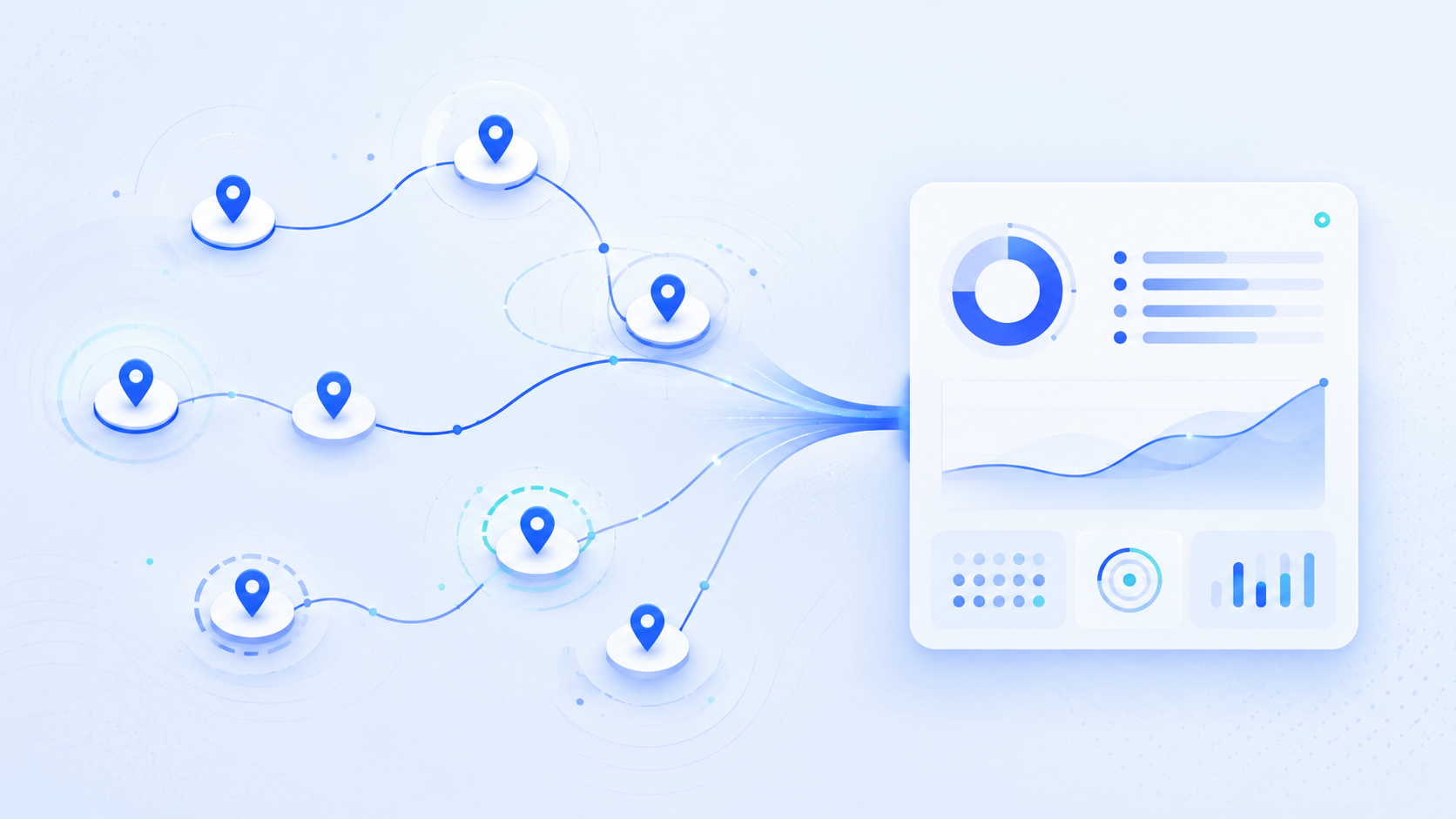
A playbook rollout is easy to announce and hard to operationalize. The training goes live. The new standard appears in the LMS. Store managers, GMs, or property leaders confirm that their teams have reviewed it. Dashboards show whether sales, guest satisfaction, or operational costs are moving.
But the question that matters most is harder to answer: has the playbook actually become habit across locations?
For multi-location operators, measuring playbook adoption requires more than a completion report. It requires an operational intelligence platform that can connect training, frontline execution, customer experience, and location-level variance into one view.
What “Operational” Means in This Context
A quick terminology note: this article is not about military operations, operational aircraft, or the meaning of operational in a dictionary sense. Here, operational refers to the operating model of a business: the daily activities, behaviors, systems, handoffs, and decisions that determine whether a service standard is actually delivered.
Operational definitions matter because leaders need to define what adoption looks like before they can measure it. If a guest experience playbook says “create a warm welcome,” that is too broad. If it says “greet the guest by name when a reservation exists, acknowledge the occasion, explain the wait time, and offer a recovery action when the room or table is not ready,” that can be measured.
The goal is to turn broad operational aspects into observable operational activities.
Why Rollout Metrics Are Not Enough
Most organizations track rollout through completion. Did the manager attend training? Did the employee open the module? Did the support staff receive the checklist? Did the region finish the launch call?
Those are necessary signals, but they do not prove adoption.
A team can complete the training and still skip the behavior during peak volume. A manager can understand the standard and still fail to reinforce it. A location can hit the KPI for a few weeks because a district leader is visiting, then drift back to old habits.
That is why playbook adoption should be measured on three levels:
- Knowledge: Do employees understand the playbook and their role in it?
- Execution: Are employees applying it consistently in real shifts?
- Reinforcement: Are managers, systems, and incentives making the behavior stick?
Dashboards often capture the downstream business result. They rarely explain which of those three levels is failing.
The Data Sources That Help Measure Adoption
A strong measurement system combines quantitative and qualitative signals.
Training and System Data
Training completion, LMS activity, ERP workflows, CRM notes, task management completion, and historical data can confirm whether the rollout reached the intended audience. These are useful adoption inputs, but they are not enough on their own.
Operational KPIs
KPIs such as check average, table turn time, repeat visit rate, guest satisfaction, conversion, complaint rate, room readiness, or upsell attachment can show whether the business outcome is moving. KPI measurement is essential, but it usually answers “what happened” rather than “why.”
Frontline Feedback
Frontline conversations show how the playbook behaves in real conditions. Employees can explain where the standard is clear, where it conflicts with reality, and which parts are skipped because of staffing, layout, unclear ownership, or manager habits.
Customer and Guest Feedback
Customer feedback validates whether the playbook is felt by the person it was designed to serve. If employees say they are recommending the new item but guests still do not understand it, the problem may be messaging, timing, or menu naming.
Observation and Mystery Shopping
Direct observation and mystery shopping help leaders evaluate whether behaviors are visible from the customer side. They are especially useful for guest experience, service model, and brand standard adoption.
How an Operational Intelligence Platform Should Work
An operational intelligence platform should not simply collect more data. It should connect scattered signals into a decision-ready view.
Traditional business intelligence and data visualization tools can be useful for reporting. SQL queries can pull information from a database. Splunk, observability tools, and AIOps platforms can help technology teams with anomaly detection and real-time monitoring. Data ingestion pipelines can bring information from multiple systems into one environment.
Those tools matter, but they often miss the human layer of playbook adoption.
For example, a dashboard might show that the check average improved in Location 1 but not in Location 2. The operational intelligence question is why. Are servers in Location 2 skipping the recommendation? Do they dislike the item? Does the kitchen slow down when it is ordered? Is the manager not reinforcing the behavior? Are guests asking different questions in that market?
That is where frontline conversation belongs in the measurement model.
A Practical Framework for Measuring Adoption
Step 1: Define the Behavior, Not Just the Initiative
Start by translating the playbook into measurable behaviors. “Improve hospitality” is not measurable. “Greet every reservation by name when the information is available” is measurable.
For every playbook, define:
- The intended behavior
- The role responsible for it
- The moment in the guest or customer journey
- The system or tool needed to execute it
- The manager’s reinforcement behavior
- The KPI or outcome that it should influence
This creates the operational definitions needed for measurement.
Step 2: Ask the Frontline What Happens During the Shift
Do not only ask, “Do you understand the playbook?” Ask questions that surface reality:
- Tell us about the last time you tried to follow the new standard.
- Which part is hardest to execute during a rush?
- What do guests or customers notice?
- What do you skip when the shift gets busy?
- What would make this easier to do every time?
Open-ended conversation reveals whether the issue is knowledge, workflow, tools, manager reinforcement, or customer fit.
Step 3: Compare Individual Confidence to Collective Trust
One of the strongest adoption signals is the gap between “I understand the standard” and “my team executes it consistently.”
Employees may feel confident in their own execution while doubting whether peers do the same. That gap points to accountability, recognition, and manager reinforcement. It also helps leaders avoid over-investing in more training when the real issue is consistency.
Step 4: Monitor by Location, Role, Shift, and Market
Playbook adoption is rarely uniform. A new service model may work for hosts but not servers. A hotel check-in standard may work at urban properties but not at resort properties. A loyalty prompt may work on weekdays but collapse during weekend volume.
Segmenting feedback by location, role, tenure, and shift helps leaders see where the rollout has become habit and where it still depends on individual effort.
Step 5: Connect Themes to KPIs
The best measurement programs connect qualitative themes to business outcomes. If team members say the handheld POS slows down table touches, compare that feedback to table turn time, check average, and review sentiment. If employees say guests do not understand the new offer, compare that to conversion and attach rate.
This is where operational intelligence becomes more valuable than raw reporting. It connects the metric to the operating reason behind the metric.
Common Signs a Playbook Has Not Become Habit
A rollout is still fragile when employees describe any of these patterns:
- “We do it when the manager is on the floor.”
- “New hires understand it, but veteran employees ignore it.”
- “It works on slow shifts, not on weekends.”
- “Guests like it, but the system makes it hard.”
- “Everyone says they know the standard, but every shift does it differently.”
- “We were trained once and never heard about it again.”
These comments are not complaints to dismiss. They are adoption signals.
How Arbor Helps Leaders Measure Playbook Adoption
Arbor helps operations leaders capture real conversations with frontline employees, customers, guests, and mystery shoppers, then synthesize those conversations into executive-ready intelligence.
For a playbook rollout, Arbor can help leaders understand whether teams know the standard, whether they trust peers to execute it, where the process breaks, and which locations need support. The output is not just a transcript library. It is themes, root causes, quotes, recommendations, and location-level patterns that leaders can act on.
That makes Arbor especially useful for restaurants, hotels, retail, entertainment, and other frontline-heavy businesses where execution varies across hundreds of locations.
The Bottom Line
Rollout is not adoption. Completion is not a habit. A dashboard is not a diagnosis.
To measure playbook adoption across locations, leaders need to define the behavior, listen to the people executing it, compare patterns across sites, connect feedback to KPIs, and act before the rollout loses momentum.
An operational intelligence platform should help leaders answer the question that matters most: what is actually happening on the ground, and what should we do next?
Book a demo with Arbor to see how frontline conversations turn playbook adoption into measurable operational intelligence.