
Anonymous Employee Feedback Tool for Operational Truth
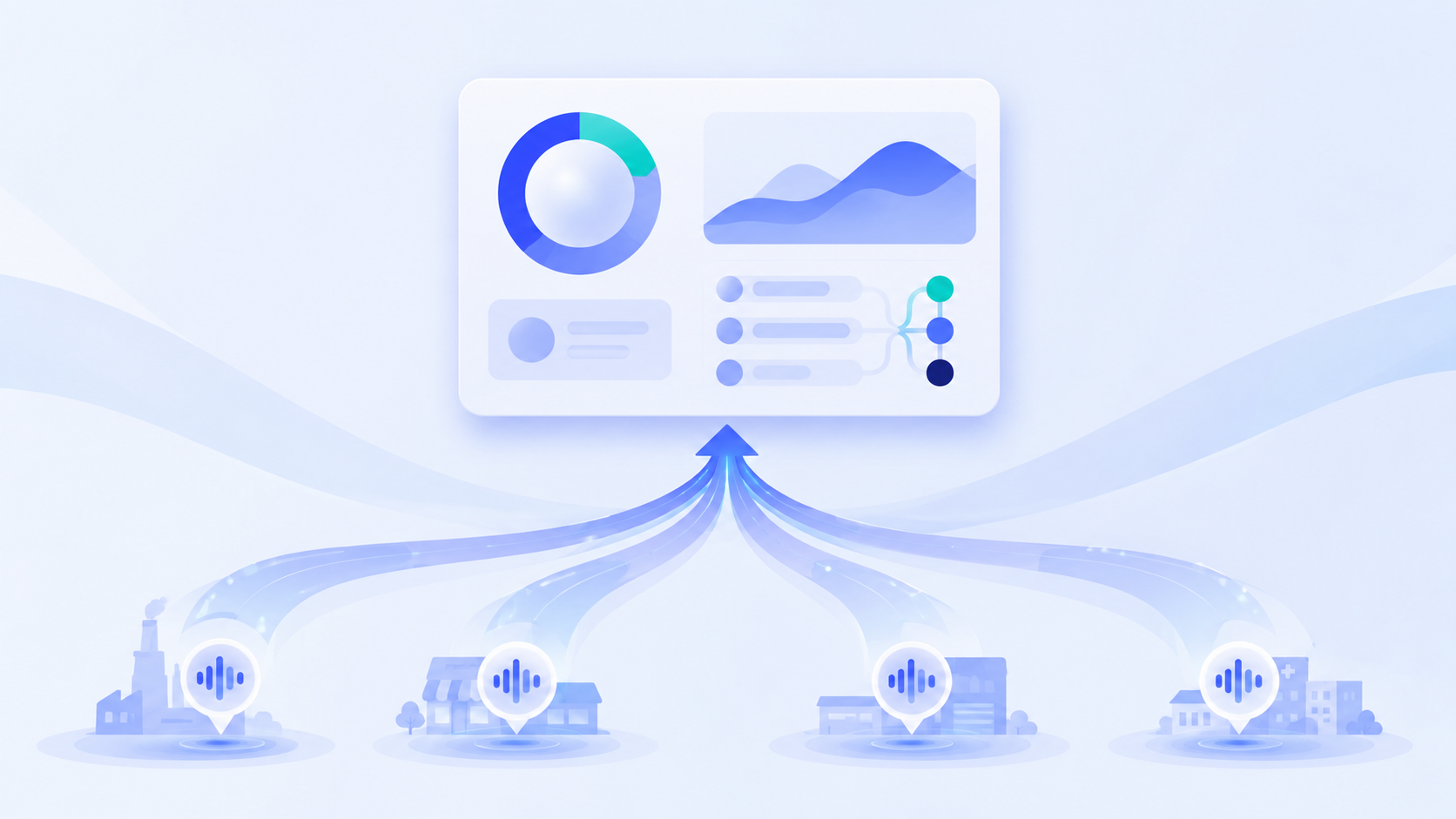
Most companies already have an employee feedback program. They run employee engagement surveys, send pulse surveys, ask managers to collect comments, and sometimes keep a digital suggestion box open all year. The intention is good: create open communication, protect psychological safety, and give employees a way to say what is working and what is not.
But operations leaders often run into the same gap. The scores move, the word clouds look interesting, and sentiment analysis shows whether people sound positive or negative. Still, the business question remains unanswered: what exactly is breaking on the floor, at the front desk, in the kitchen, in the store, or in the service handoff?
That is the frontline feedback gap. It is the difference between knowing employees are frustrated and knowing the operational truth behind that frustration.
For multi-location businesses, the right anonymous employee feedback tool should do more than measure employee satisfaction. It should help leaders understand where process issues, guest friction, customer feedback, and revenue opportunities are showing up before they become visible in lagging KPIs.
Why Traditional Employee Surveys Miss Operational Truth
Traditional online surveys are useful when the goal is broad measurement. They can track company culture, workplace culture, employee engagement, employee retention risk, and high-level satisfaction over time. Tools like SurveyMonkey, Typeform, Google Forms, Poll Everywhere, Leapsome, and Incogneato can help HR managers ask questions at scale.
The issue is not that surveys are bad. The issue is that surveys were built around structured answers, not operational diagnosis.
A multiple-choice question can tell you that a team member disagrees with “I have the tools I need to do my job.” It usually cannot tell you that the handheld POS freezes every Friday night, that the prep station is missing one ingredient during the lunch rush, or that a housekeeping team keeps losing time because room preferences are not carried over from the booking engine.
Those details are where operational truth lives. They show up in the story, not the score.
The Limits of Engagement, Performance Reviews, and 360-Degree Feedback
Most feedback channels are designed for one of three jobs.
Employee engagement programs measure how people feel about work. Performance reviews evaluate how an employee is doing. 360-degree feedback collects input on a person’s strengths, weaknesses, and behaviors. Each can be useful, but none is designed to answer the questions a COO, VP of Operations, VP of Guest Experience, or field leader needs answered every week.
Those leaders are asking questions like:
- Why are guest satisfaction scores falling in this region?
- Why does one location execute the playbook better than another?
- What process is creating the most avoidable work for the frontline?
- Which complaints are symptoms of a training issue, a staffing issue, or a systems issue?
- What are employees hearing from customers that dashboards cannot explain?
A quarterly engagement survey may include open-ended questions, but the format still works against specificity. Employees often write short answers because typing takes effort, they are on the clock, or they assume nobody will read a long response. Leaders get comments, but not enough context to make data-driven decisions.
What an Anonymous Employee Feedback Tool Needs to Capture
An effective anonymous employee feedback tool for frontline operations should protect anonymity while still preserving context.
That balance matters. If feedback is too identifiable, employees hold back. If it is too abstract, leaders cannot act. The goal is not to expose the individual. The goal is to understand the pattern.
For frontline teams, the most valuable feedback usually includes five layers.
First, the employee describes the moment. What happened during the shift, guest interaction, service failure, or handoff?
Second, they explain the root cause. Was the problem caused by training, staffing, inventory, system access, manager reinforcement, unclear communication, or a physical layout issue?
Third, they explain the impact. Did it slow throughput, frustrate customers, reduce check average, create rework, hurt morale, or increase operational costs?
Fourth, they share the workaround. Frontline employees often create unofficial fixes long before leadership sees the problem.
Fifth, they suggest the practical change. The best ideas are often small: move the POS prompt, change the pre-shift briefing, update the checklist, translate the instructions, adjust the handoff, or add one tool to the station.
That is very different from asking employees to choose a rating on a scale.
Why Voice and Conversation Change the Quality of Feedback
Frontline workers do not spend their day at a desk. Many are moving between tables, rooms, registers, trucks, service calls, stations, or guest requests. That is why the format of the feedback channel matters.
A form asks employees to stop, sit, read, type, and submit. A conversation lets them explain what happened in the way they would naturally tell a manager or peer.
Voice-based feedback also changes the depth of responses. Employees are more likely to describe a sequence: “The guest asked about the upgrade, but we could not see availability,” or “The new station setup works until the dinner rush, then two people cross paths at the same point.” That kind of detail rarely fits neatly inside a form field.
Live polls can be useful for quick temperature checks. Reporting tools can show trends. NPS can summarize loyalty or recommendation intent. But conversational feedback is better suited for the why behind the metric.
What Frontline Conversations Reveal That Surveys Often Miss
When companies capture frontline conversations consistently, the insights tend to fall into a few operational categories.
Process Breakdowns
The frontline sees how work actually gets done, not just how it was documented. Employees can point to steps that are skipped, duplicated, misunderstood, or impossible under real shift conditions.
For example, a new guest journey playbook may look clear in training, but employees may explain that the table touch disappears on weekend rushes because the timing conflicts with food running. A survey might show inconsistent execution. A conversation explains why.
Customer Friction
Frontline employees hear customer feedback before it becomes a review. They know which questions guests ask repeatedly, which policies create confusion, and which promises the brand makes that operations cannot reliably keep.
That makes frontline feedback a customer intelligence source, not just an HR input.
Location Variance
Multi-location businesses rarely have one customer experience. They have as many versions as they have locations, shifts, managers, and teams. Conversations help leaders compare themes across regions without relying only on anecdotes.
Revenue Opportunities
Frontline employees often know where revenue is being left on the table. A front desk agent knows guests ask about late checkout, but the system does not surface availability. A server knows customers like a limited-time menu item, but the name confuses them. A retail associate knows shoppers abandon a purchase when loyalty enrollment takes too long.
Surveys often categorize those as satisfaction issues. Frontline conversations connect them to revenue.
How to Make Anonymous Feedback Actionable
An anonymous employee feedback tool becomes valuable when it turns open-ended comments into usable operational intelligence.
The first step is question design. Ask about recent moments, not abstract opinions. “Tell us about the last time the new service model slowed you down” will produce better data than “How satisfied are you with the rollout?”
The second step is structured follow-up. If an employee says the handoff is confusing, the system should ask what part of the handoff is confusing, when it happens, who is affected, and what would fix it.
The third step is synthesis. Leaders should not have to read every transcript manually. They need themes, root causes, quotes, severity, location patterns, and recommended actions.
The fourth step is closing the loop. Employees participate when they see that feedback leads to change. A short message from leadership saying, “Last month you told us the closing checklist was unclear; here is what changed,” does more for trust than another generic reminder to complete the survey.
What to Look for in a Frontline Feedback Platform
When evaluating tools, leaders should look beyond basic anonymity and response collection.
A frontline-ready platform should support mobile participation, multilingual conversations, anonymous feedback survey workflows, open-ended questions, and analysis that turns qualitative feedback into operational themes. It should help operations, HR, and customer experience teams work from the same evidence instead of keeping employee voice, customer feedback, and business performance in separate systems.
It should also produce outputs leaders can act on: ranked themes, root causes, affected locations, direct quotes, and recommended next steps. A dashboard is not enough if the dashboard only shows that something is wrong.
That is where Arbor fits. Arbor is built for real-world frontline intelligence: AI-led conversations with employees and customers, synthesized into operational insight that leaders can use. Instead of replacing surveys, Arbor gives leaders the missing context behind the scores.
The Bottom Line
Employee surveys can measure sentiment. They can track engagement. They can give HR managers a broad view of workplace culture. But they often miss the operational truth that frontline employees already know.
For multi-location businesses, the next generation of anonymous employee feedback tools is not just a safer suggestion box. It is a continuous listening layer that turns real conversations into specific, actionable intelligence.
When employees can explain what happened, why it happened, how it affected customers, and what would fix it, leaders get more than feedback. They get the ground truth they need to improve the business.
Ready to hear what your frontline already knows? Book a demo with Arbor to see how real conversations become real intelligence.