
Hotel Guest Experience: Improve Every Guest Touchpoint
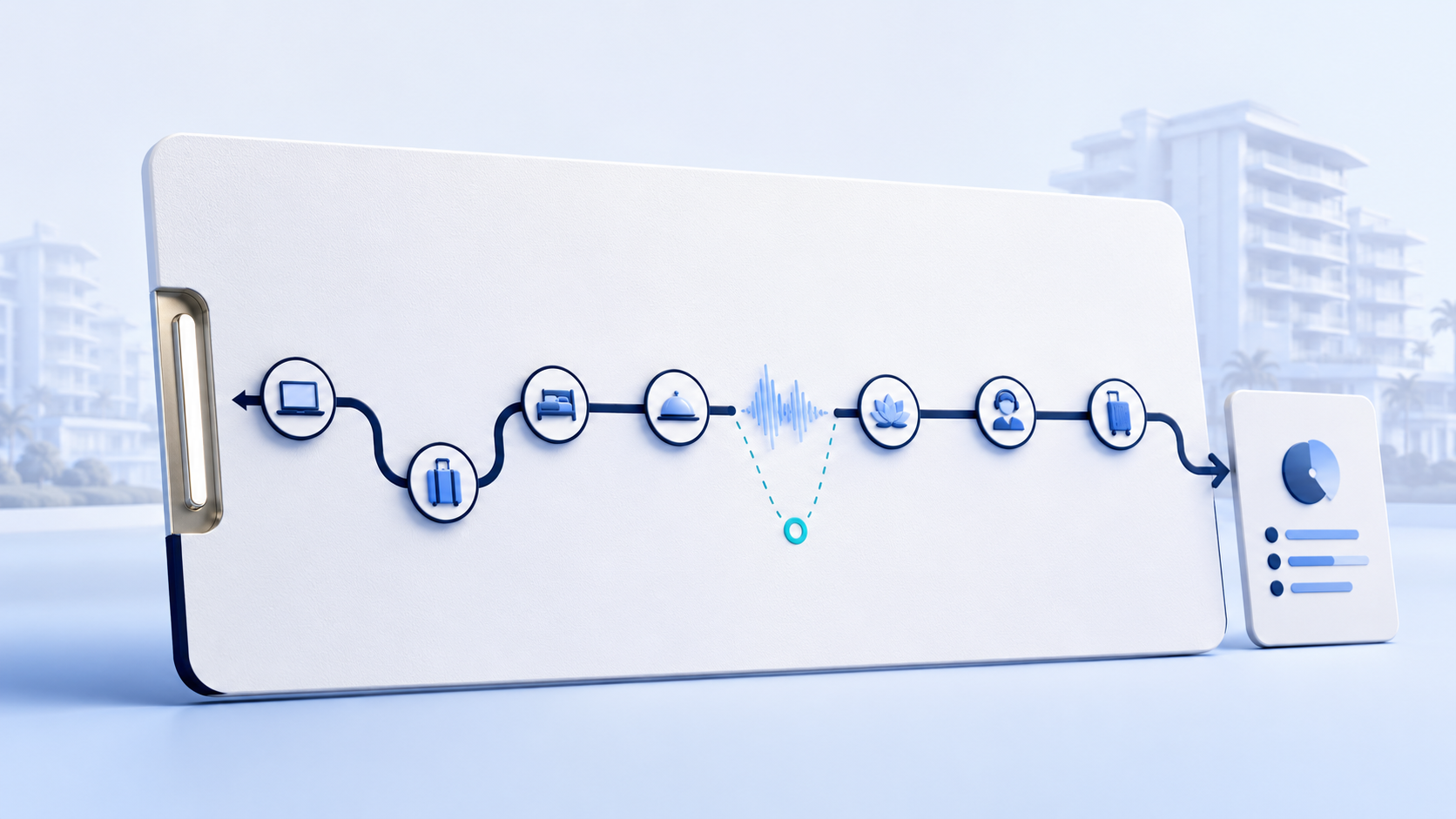
Hotel guest experience is the combined result of dozens of connected moments: finding the property, completing the booking process, receiving pre-arrival information, checking in, entering the room, using amenities, resolving problems, and deciding whether to return. A strong interaction at one touchpoint can be undone by a broken handoff at the next.
That is why guest satisfaction scores alone are not enough. They show whether a problem exists, but rarely explain why it happened. To improve guest experience across properties, hospitality leaders need direct context from guests and the employees delivering the stay.
What Does Guest Experience Mean in a Hotel?
It describes the complete relationship a traveler has with a property across the stay. Guest service is one part of that relationship. Guest experience also includes digital interactions, physical surroundings, operational reliability, expectations, and brand consistency.
Expectations differ by property type and guest segment. Business travelers may prioritize speed, Wi-Fi, and mobile check-in. Families may value room amenities, dining flexibility, and clear information. Gen Z guests may expect mobile apps, self-check-in, chatbots, and fast digital support. Luxury travelers may expect recognition, personalization, and a proactive concierge.
Effective guest experience management accounts for those differences without creating an inconsistent operating model.
Why the Guest Experience Is Difficult to Measure
Every property delivers a slightly different version of the brand. Staffing, leadership, building condition, demand patterns, and local workflows all create variation.
Across the hospitality industry, traditional feedback has structural limits. Surveys capture a small and often polarized sample, while public reviews arrive after the stay, when the service-recovery and revenue opportunity may already be lost. Research on bias in customer reviews shows that self-selected reviewers may not represent the broader customer population. Portfolio averages also conceal property-level problems, while operational data shows what happened without explaining the guest’s reasoning.
The same issue applies to Net Promoter Score. The score should begin a closed-loop learning process, not replace the work of understanding root causes. NPS and guest satisfaction matter, but they become more useful when paired with open-ended evidence.
The Major Hotel Touchpoints
Research and Booking
The guest journey begins before arrival. Website clarity, the booking engine, price transparency, room selection, direct bookings, and OTA listings shape expectations. Hotels should review how the channel manager, CRM, and property management system share rate, inventory, and guest preferences. Clear total pricing also matters; reporting on the FTC’s lodging-fee rule shows why mandatory charges should be visible early in the booking process.
Pre-Arrival Communication
Pre-arrival messages should confirm transportation, parking, check-in timing, upgrades, accessibility needs, and special occasions. A well-timed message can promote room upgrades, early check-in, dining, spa appointments, or other relevant offers without feeling generic.
Arrival and Check-In
Guests notice wait times, recognition, room readiness, and whether prior requests reached the front desk. Mobile check-in, contactless check-in, and self-check-in can reduce friction, but only when the PMS and property management system reflect accurate room status and staff can step in when technology fails.
The Room, Dining, and Hotel Amenities
Cleanliness, comfort, maintenance, room service, and promised room amenities form the core stay. Dining quality, pacing, availability, and attentiveness shape both satisfaction and ancillary spend. Spa, pool, fitness, business services, and concierge support should be easy to discover and use.
Internet of Things technology can improve comfort through connected thermostats, lighting, and maintenance alerts. But IoT should support human service rather than create another confusing interface.
Service Recovery, Checkout, and Post-Stay
Service recovery is where guest loyalty is often won or lost. Employees need authority, clear escalation paths, and current information. Checkout should be accurate and simple, followed by thoughtful post-stay communication that invites feedback and encourages repeat bookings instead of a generic message.
The Operational Gaps That Shape the Guest Journey
Many experienced failures are handoff failures: booking preferences never reach the property, rooms are not ready when promised, maintenance requests stall between departments, or guests do not know an amenity exists. Employees often compensate for broken systems in real time.
These gaps also affect the hotel’s online reputation. Reputation management cannot be separated from operations because online reviews reflect the experience that teams delivered. Strong staff training helps, but training alone cannot fix a broken workflow, inaccurate system, or unclear owner.
What Hotel Employees Know About the Guest Experience
Front desk agents recognize recurring check-in friction. Housekeepers see room-condition and maintenance patterns. Servers hear direct reactions to food, pacing, and value. Concierge and spa teams understand unmet expectations. They know which issues are isolated and which repeat every shift.
Yet that knowledge rarely reaches portfolio leadership in a structured form. As Arbor explains in How Frontline Teams Decode What Customers Actually Need, frontline teams can connect customer symptoms to the operational causes behind them.
How to Collect Better Guest Feedback
Capture feedback close to the relevant touchpoint instead of relying on one end-of-stay survey. Combine structured ratings with open-ended conversations, ask adaptive follow-up questions, and offer multilingual participation. Segment findings by property, guest type, channel, and touchpoint while preserving direct quotes as evidence.
Include both guests and employees. Guest conversations explain expectations. Employee conversations reveal patterns, workarounds, and process failures. This creates a fuller view of guest experience in hospitality than ratings alone.
How to Find the Root Cause Behind Guest Experience Scores
Start with the score or operational metric, then identify the touchpoint driving it. Analyze repeated explanations, compare properties, and connect the issue to the underlying workflow or handoff. Prioritize the fix based on severity, frequency, guest impact, and revenue impact.
For example, a lower review score may look like a front-desk problem. Conversation data may reveal that the real cause is inaccurate room-ready status in the PMS, causing employees to manage expectations they cannot control.
Guest Experience Metrics to Monitor
Track guest satisfaction, review sentiment, repeat booking intent, loyalty enrollment, resolution time, upgrades, ancillary revenue, and touchpoint ratings. Net Promoter Score and NPS can support benchmarking, but they should sit beside qualitative explanations.
Also monitor direct bookings versus OTA and other OTA channels, repeat business, customer loyalty, brand loyalty, and loyalty programs. These indicators help connect experience improvements to guest loyalty and commercial outcomes.
From Hotel Feedback to Property-Level Action
Give property leaders specific findings rather than broad averages. Rank recurring friction by severity, identify the departments responsible for each handoff, and assign an owner and timeline. Then track whether the change improves the experience over time and share successful practices across properties.
This is where continuous operational listening is more useful than isolated surveys or quarterly mystery shops. It turns individual comments into a repeatable improvement system.
Build a Continuous View Across the Stay
Quarterly surveys, mobile apps, mystery shops, CRM data, and reputation management tools show offline customer experience only in parts. The opportunity is to connect them with continuous conversation data from guests and employees.
Arbor captures voice and text conversations across the guest journey, asks follow-up questions, supports multilingual participation, and synthesizes the findings by property and touchpoint. Leaders can see where the guest experience is breaking, why it is happening, and which action should come next.
Turn touchpoint-level conversations into portfolio-wide guest intelligence with Arbor.
Final Thoughts
A better guest experience does not come from chasing one score. It comes from understanding how expectations, systems, employees, and property conditions interact across the entire guest journey. Hotels that combine metrics with direct context can resolve friction earlier, protect repeat bookings, and build stronger brand loyalty.
FAQs
Q: What is the difference between guest service and the broader experience?
Guest service describes direct employee assistance. Hotel guest experience includes every digital, physical, operational, and emotional interaction before, during, and after the stay.
Q: Which guest experience metrics matter most?
Track guest satisfaction, NPS, review sentiment, check-in and resolution time, repeat bookings, loyalty enrollment, ancillary revenue, and touchpoint-level consistency across properties.
Q: How can hotels improve guest experience across multiple properties?
Compare feedback by property and touchpoint, identify repeated root causes, assign clear operational owners, and monitor whether changes improve satisfaction and loyalty over time.
Q: How does Arbor support guest experience management?
Arbor collects conversational feedback from guests and frontline employees, asks adaptive follow-up questions, and turns the responses into property-level themes, evidence, and prioritized actions.