
Digital Transformation in Retail: What Works
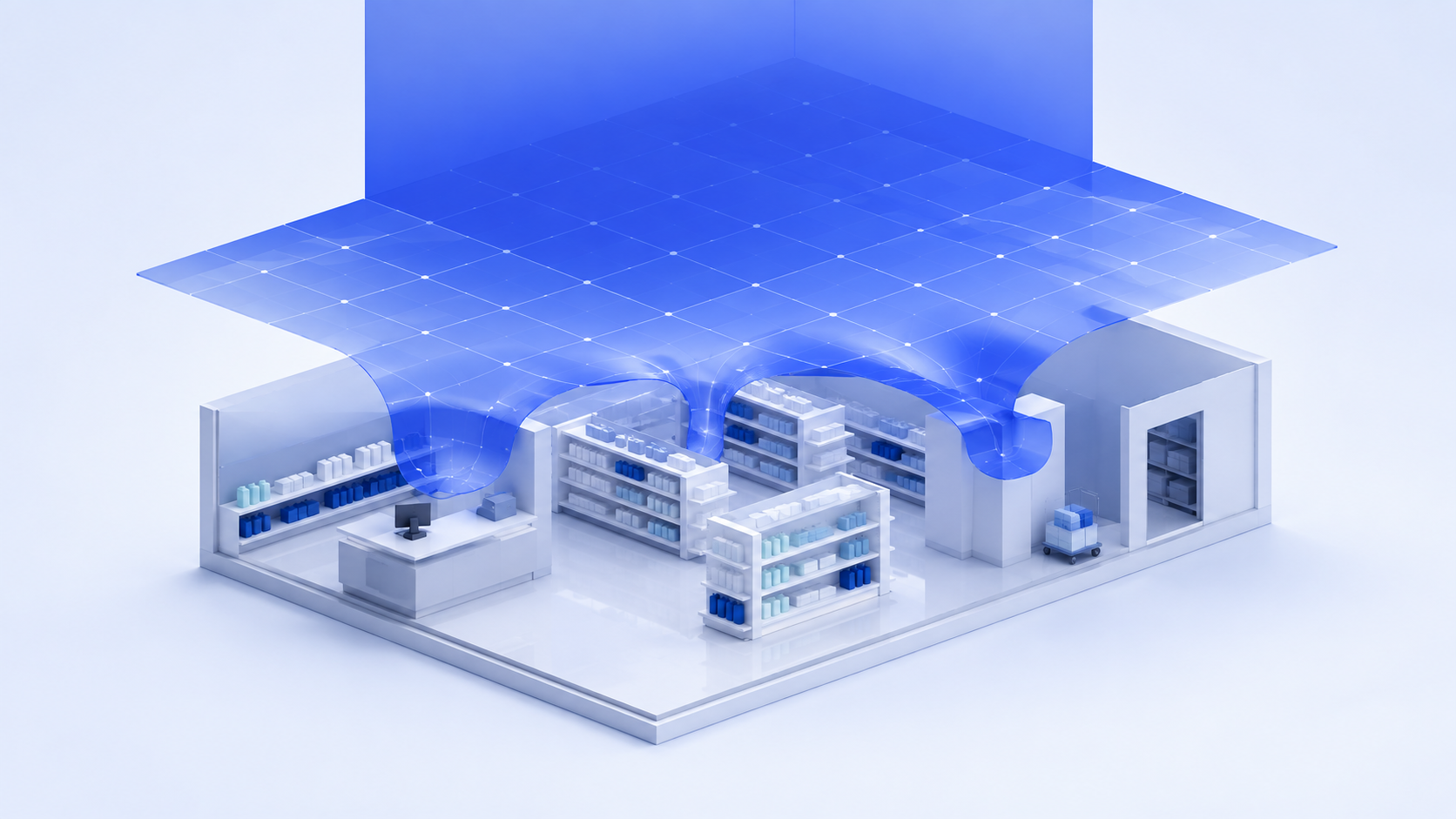
Retail digital transformation is often framed as a technology problem. Buying the technology is usually the easy part. The harder work starts when employees across stores, roles, and shifts have to use a new system while serving customers and managing real store conditions.
That is why successful digital transformation in retail is not measured by deployment alone. It is measured by whether technology changes behavior on the floor, improves the customer experience, and produces the intended operating result.
What Is Digital Transformation in Retail?
Digital transformation in retail means redesigning how a retailer operates and serves customers using digital technologies. It can include POS technology, inventory management, workforce tools, loyalty programs, mobile apps, and digital training. It also spans e-commerce and e-commerce platforms, connecting the store to a broader shopping journey.
The technology layer can extend to CRM, cloud computing, data analytics, big data, artificial intelligence, machine learning, predictive analytics, recommendation engines, chatbots, augmented reality, blockchain, and automation. In stores and supply chains, RFID and the Internet of Things (IoT) can support real-time tracking and real-time visibility.
But digitizing a task is not the same as changing the business. Transformation changes workflows, decision rights, employee behavior, customer experiences, and business models. The goal is measurable improvement: better operational efficiency, stronger customer loyalty, more reliable demand forecasting, personalized shopping experiences, or the ability to optimize pricing with better information.
Why Digital Transformation Fails at the Store Level
Headquarters designs a rollout under controlled conditions. Stores experience it under real ones.
A new process may add taps instead of removing them. A mobile tool may work in training but fail when associates are moving between customers and mobile devices. A new point-of-sale workflow may depend on data trapped in legacy systems. Omnichannel integration may look clean on paper while stores still reconcile conflicting inventory across channels and data silos.
This is where change management becomes operational. Training can explain features without preparing employees for a rush, a stock discrepancy, or a manager shortage. Different locations invent different workarounds. By the time corporate sees a falling KPI, the frontline may already know why execution is failing.
Arbor is built around this gap: dashboards show the lagging result, while the people doing the work can often explain the cause. Arbor’s guide to measuring playbook adoption across every location applies the same idea to multi-location rollouts.
The Store Adoption Gap
Retail leaders should think about adoption as a sequence:
Deployed → Used → Used correctly → Embedded into workflow → Producing the intended outcome
Logging into a system does not mean employees have adopted it. Training completion is not proof of execution. Usage data can show that an associate opened a tool, not whether it helped complete the job.
Consider a new inventory application. Usage may look healthy, yet associates may bypass it because shelf data is unreliable during peak periods. They use the new system for compliance and an old workaround to finish the task. That is a process design problem.
The same issue appears in AI-powered personalization. Recommendation engines may generate better offers, but the customer experience improves only if associates understand the offer, the POS systems surface it at the right moment, and the loyalty program can recognize the customer. Technology adoption has to survive the workflow around it.
6 Signs a Retail Transformation Is Struggling
- Employees create manual workarounds. Ask: What do you do when the new process does not work as expected?
- Adoption varies dramatically by store. Ask: What makes this process easier here than elsewhere?
- Managers repeatedly retrain the same process. Ask: Which step do employees keep misunderstanding?
- Old and new systems run in parallel. Ask: Which legacy system or offline step do you still depend on?
- Customer friction rises after launch. Ask: Where are customers waiting, repeating information, or abandoning the interaction?
- Corporate KPIs decline without a technical outage. Ask: What changed in the workflow when performance started slipping?
These are also the questions that matter during expansion. Arbor’s new store opening guide shows why live frontline conditions can expose gaps that launch checklists miss.
How to Measure Digital Transformation Beyond Software Usage
A balanced framework combines system data with operating evidence: adoption and usage, workflow completion, task time, workaround frequency, training effectiveness, employee confidence, customer impact, and location-level variance.
Then connect those measures to business outcomes such as conversion, customer loyalty, throughput, labor productivity, inventory accuracy, loyalty enrollment, or e-commerce fulfillment performance. Process automation should make those outcomes easier to achieve, not simply create more digital activity.
Segmentation matters as much as the enterprise average. Break results down by location, role, shift, and tenure. A process that works for experienced managers may fail for new associates. Good data-driven decision-making makes that variance visible instead of averaging it away.
Use Frontline Feedback to Find the Why Behind Adoption Data
Usage analytics can tell you whether behavior changed. Frontline conversations can tell you why.
Ask about recent, concrete moments:
- Tell me about the last time the new system slowed you down.
- What do you do when it does not work as expected?
- Which step is hardest during peak periods?
- What did training not prepare you for?
- What would make this process easier?
Open-ended, adaptive conversations can expose workarounds, unclear handoffs, training gaps, and conflicts between process automation and store reality. They also create context around consumer behavior: employees can explain what customers ask for, where the omnichannel experience breaks, and whether personalized shopping experiences actually feel useful in the aisle.
For retailers applying artificial intelligence, governance should mature alongside adoption: a structured approach to managing AI risks across design, deployment, use, and evaluation is essential.
Arbor is designed to collect this qualitative layer at scale and synthesize it into themes, root causes, and recommended actions. Its distinction from conventional feedback programs is covered in Employee Listening Software Versus Frontline Intelligence.
A Better Framework for Retail Transformation Rollouts
Use a six-step loop: Pilot → Listen → Diagnose → Adjust → Expand → Continuously monitor.
Start with representative stores, not only the easiest locations. Define success metrics before launch. Collect frontline feedback immediately, while employees can still describe specific incidents. Compare high- and low-performing stores to separate technology defects from workflow issues. Fix the process before scaling, then keep listening after launch instead of treating implementation as complete.
That loop also improves future initiatives, shaping cleaner omnichannel integration, better automation, more realistic training, and stronger technology requirements.
Final Thoughts
Digital transformation in retail succeeds when new technology becomes part of how work actually gets done. Retail leaders therefore need visibility into both the system and the human operating environment around it.
Arbor helps multi-location teams combine operational signals with continuous frontline conversations so leaders can see where adoption is breaking, understand why, and fix the problem before a local workaround becomes a chain-wide habit.
FAQs
Q: What is digital transformation in retail?
Digital transformation in retail is the use of digital technology to redesign retail operations, customer journeys, and decision-making, not simply to digitize an existing task. Successful programs connect technology, workflow, employee adoption, and measurable business outcomes.
Q: Why do retail digital transformation initiatives fail?
They often fail because the designed process does not match store reality. Training may be too generic, tools may add friction, managers may reinforce the rollout inconsistently, or employees may create workarounds corporate cannot see.
Q: How do you measure digital transformation success?
Measure software usage alongside workflow completion, task time, customer experience, employee confidence, location variance, training effectiveness, and business outcomes. Segment results by store, role, shift, and tenure.
Q: How can retailers improve employee adoption of new technology?
Pilot in representative locations, listen to employees early, identify workflow friction, adjust the rollout, and keep monitoring after launch. Adoption improves when technology makes the job easier under real operating conditions.
Q: What role does frontline feedback play in digital transformation?
Frontline feedback explains the causes behind adoption metrics. Employees can identify workarounds, process conflicts, customer friction, and training gaps before those issues become visible in enterprise KPIs.