
Best NPS Software for Multi-Location CX Teams
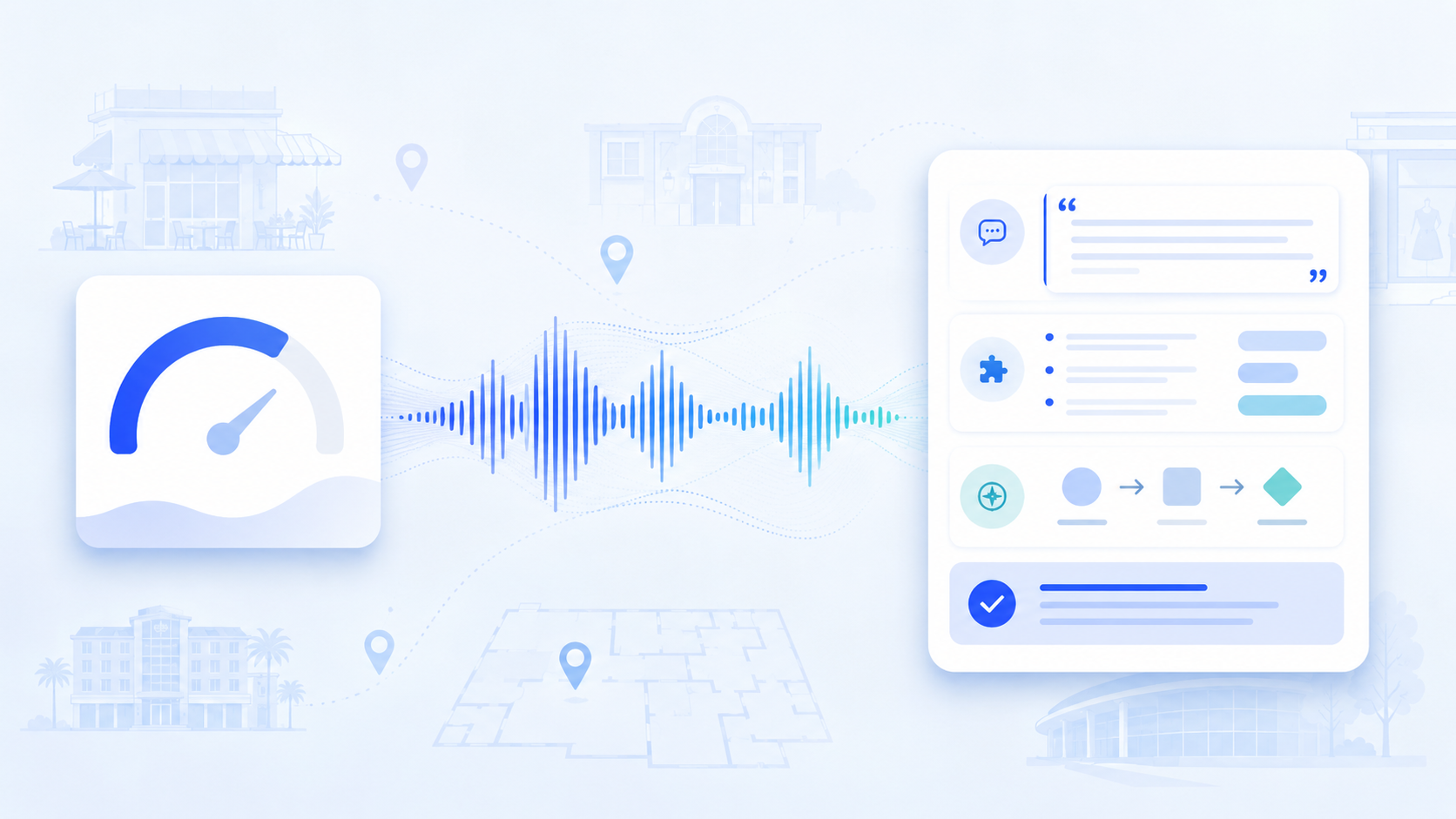
It helps companies ask the Net Promoter Score question: how likely is a customer to recommend this brand, product, or experience? Most programs sort respondents into promoters, passives, and detractors, then calculate the Net Promoter Score so leaders can track customer loyalty over time.
For CX teams, that simplicity is useful. A single NPS dashboard can show whether customer satisfaction is rising, whether detractors are increasing after a service change, or whether customer sentiment varies by region. Strong programs also connect feedback to customer segments, the customer journey, customer lifecycle, and customer retention work.
For multi-location operators, NPS measurement becomes more valuable when it sits beside other CX metrics such as CSAT, eNPS, online reviews, reputation management signals, and operational KPIs. A hotel group, restaurant chain, retailer, or venue operator can compare locations and see where service execution is strong or weak.
But the score is only the starting point. The harder question is why one location creates promoters while another creates detractors.
Where Scores Fall Short
Traditional measurement is built to score. Multi-location teams also need to understand.
A score can tell you a restaurant has declining customer satisfaction. It cannot tell you whether the cause is staffing, training, food pacing, a broken handoff, or a new service model that fails during weekend volume. A dashboard can show customer sentiment by market. It cannot explain why guests praise check-in at one property but complain about spa booking, room readiness, or front-desk communication at another. For hotels, restaurants, retailers, and venues, reviews and NPS only tell part of the guest experience story.
Open text can help, but response rates are often low and short comments rarely capture root cause. Survey fatigue makes the problem worse. Customers may skip the comment box, and frontline employees may not have time to fill out forms between shifts.
That is why the strongest CX programs combine NPS measurement with qualitative context from the people closest to the customer, including frontline teams decoding what customers actually need. An open-ended follow-up question, voice interview, frontline conversation, or mystery shop can reveal the operational reality behind Net Promoter Score movement.
Best Capabilities By Use Case
There is no single best setup for every team. The right choice depends on company size, research depth, workflow needs, integrations, and whether the journey happens mostly online or across physical locations.
Enterprise CX Measurement
Large CX teams need NPS surveys, customer satisfaction tracking, role-based reporting, governance, and real-time dashboards. These capabilities help leaders compare customer feedback across locations, regions, and brands.
But measurement is only the first step. A Net Promoter Score can show that one location has more detractors than another, but it cannot always explain whether the issue is staffing, training, wait times, cleanliness, product availability, service recovery, or inconsistent execution.
Multi-Location Customer Feedback
For multi-location teams, customer feedback needs to be segmented by store, property, region, shift, guest type, channel, and touchpoint. A national NPS average can hide the exact locations where the CX is improving or breaking down.
Arbor helps teams understand the why behind NPS movement by capturing AI-moderated conversations with customers, guests, mystery shoppers, and frontline employees. Instead of relying only on scores, promoters, detractors, and short survey responses, Arbor surfaces themes, root causes, quotes, and recommended actions.
Offline And In-Person Customer Experience
Hotels, restaurants, retailers, venues, and other frontline-first businesses need more than digital feedback collection. The most important journey moments often happen in person: check-in, service interactions, store visits, dining experiences, guest recovery, and post-visit follow-up. That is why offline customer experience needs better data: the physical world is full of customer signals that disappear unless teams capture the context behind them.
Strong feedback programs should support low-friction collection across email, SMS, QR codes, mobile surveys, website surveys, and in-app surveys. Multi-channel distribution can improve reach when it includes both mobile surveys and in-app surveys. Multi-channel distribution also reduces dependence on one response path, and skip logic can make questions feel more relevant. But reach alone is not the same as feedback quality; AAPOR’s survey research standards emphasize sound research practice, transparency, and responsible data collection. Teams also need qualitative context that explains what happened and why it mattered.
Close-The-Loop Action
NPS is most valuable when it leads to action. A strong customer feedback program should help teams identify detractors, understand recurring issues, route follow-up to the right owner, and separate one-off complaints from systemic operational patterns.
For distributed teams, close-the-loop workflows should connect to the way the business already operates. That may include a CRM record, a helpdesk queue, a service recovery process, a regional operations review, or a weekly location meeting. The point is not just to collect feedback. The point is to move from signal to decision.
Arbor turns conversations into operational intelligence so CX and operations leaders can prioritize what to fix next. The result is not just another dashboard, but a clearer view of what customers are saying, what frontline teams are seeing, and which changes are most likely to improve customer satisfaction and repeat visits.
What Multi-Location Teams Should Evaluate
The best feedback system for a distributed business should help leaders act, not just report.
First, check segmentation. Results should break down by location, brand, region, customer segments, channel, and touchpoint. A systemwide score can hide major variance.
Second, check workflows. Can the feedback process route detractors to local managers, alert regional leaders, support service recovery, and move insight into the CRM, helpdesk, or operating rhythm your team already uses?
Third, check analysis. Sentiment analysis and real-time dashboards are useful, but leaders need the reason behind the trend. A good NPS dashboard shows what changed. A stronger intelligence layer shows why it changed and what to fix next.
Fourth, check survey design. NPS, CSAT, and customer effort score each answer a different question. NPS measures recommendation. CSAT measures customer satisfaction after a moment. CES measures effort. Used together, they give a better view of customer experience than any one KPI alone.
Finally, check governance. If a feedback program collects identifiable customer information or employee input, teams should consider consent, access controls, language accessibility, retention practices, and GDPR requirements. Those choices shape trust, response rates, and the quality of the insight.
Why Arbor Belongs In The NPS Software Stack
Arbor is not traditional NPS software. Arbor is a frontline intelligence platform that helps customer experience and operations leaders understand the why behind scores, reviews, and surveys.
Umi, Arbor’s AI researcher, conducts voice-based conversations with frontline employees, customers, guests, and mystery shoppers. Instead of relying only on passives, promoters, detractors, and short survey comments, Arbor captures richer context and turns it into themes, root causes, quotes, and recommended actions.
That makes Arbor useful when a team already has score tracking but still lacks operational explanation. A low Net Promoter Score at a hotel may point to a guest issue, while frontline conversations reveal that booking notes never reach the front desk. A restaurant may see lower customer loyalty, while servers explain that the new service flow breaks during rush periods. A retailer may see weaker customer retention, while associates reveal that loyalty prompts are buried in the POS.
The score points to the problem. The frontline explains the cause.
The Best Stack Helps You Act
For multi-location CX teams, the best system is not just the cleanest dashboard or the longest feature list. It is the system that helps leaders move from measurement to action.
Use score tracking to measure Net Promoter Score, identify promoters, passives, and detractors, and monitor customer satisfaction over time. Use qualitative research and frontline intelligence to understand the operational causes behind the numbers.
That combination gives executives what they actually need: a clear view of CX performance, the ground-truth context behind the score, and a practical path to improve it.
Ready To Understand The Why Behind Your NPS?
Arbor helps customer experience and operations teams turn frontline and customer conversations into executive-ready intelligence. Explore Umi for Customer Experience to see how Arbor adds context behind the score.
FAQs
Q: What is NPS software?
NPS software helps companies collect, calculate, analyze, and act on Net Promoter Score feedback. Most programs support survey distribution, segmentation, reporting, and customer follow-up workflows.
Q: What is the best setup for multi-location CX teams?
The best setup combines score tracking with location-level segmentation, qualitative context, close-the-loop action, and operational insight. Arbor helps teams understand the frontline reasons behind NPS movement.
Q: Can Arbor replace NPS software?
Arbor is not a traditional NPS survey platform. It complements score-tracking by capturing conversations with frontline employees, customers, guests, and mystery shoppers, then synthesizing the root causes behind CX scores.