
Voice of Customer Tools for Multi-Location Businesses
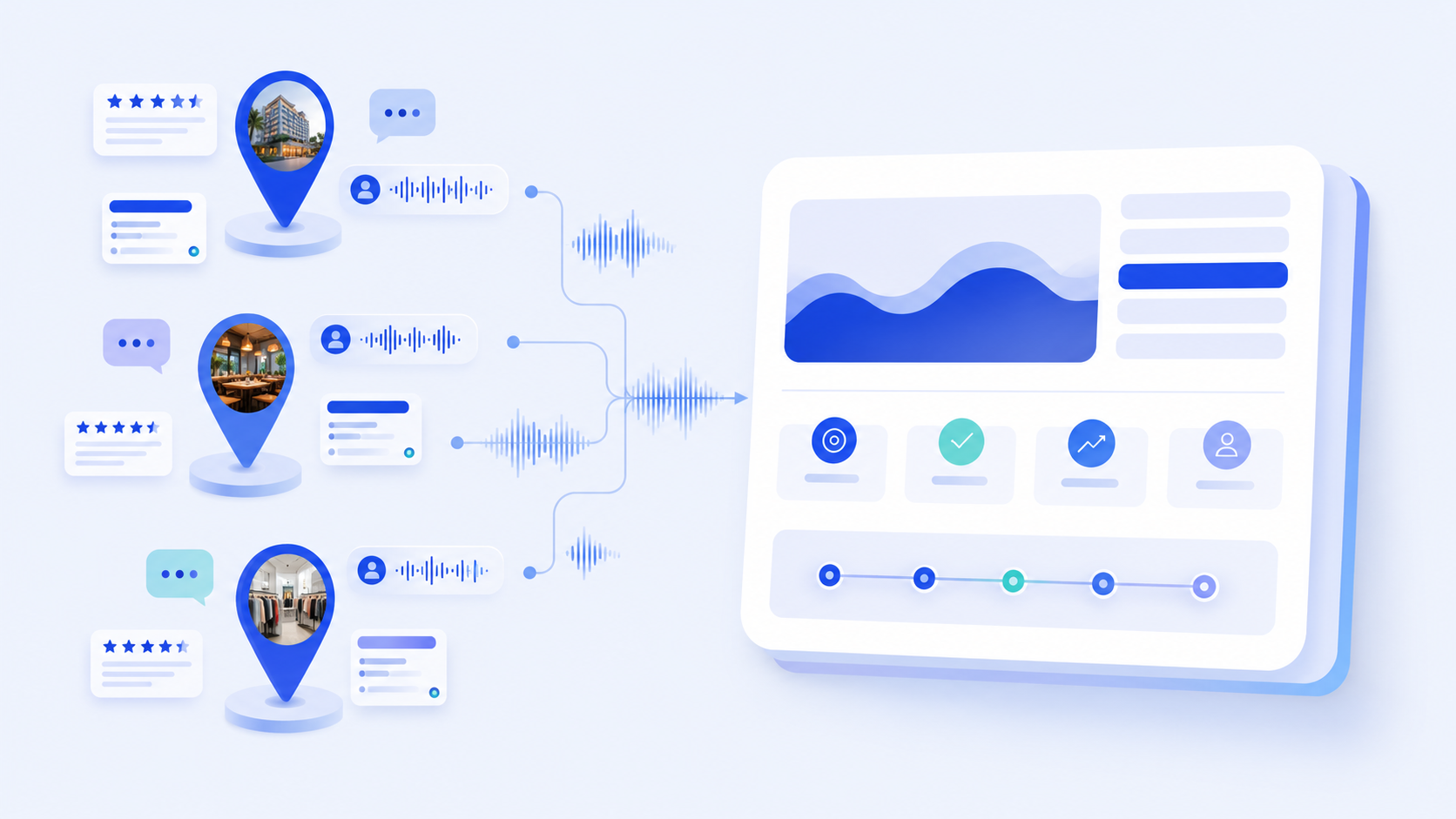
Voice of customer tools help companies collect, analyze, and act on customer feedback. That feedback can come from NPS, CSAT, CES, reviews, social media, support tickets, customer interviews, focus groups, feedback forms, call transcripts, app comments, and mystery shopping. The goal is not simply to gather more data. The goal is to understand what customers want, where customer experience breaks, and which fixes will improve customer satisfaction, customer loyalty, and customer retention.
For multi-location businesses, VoC tools have a harder job than they do for digital-only teams. A restaurant chain can have 200 versions of the same guest journey. A hotel group can deliver a different arrival, room, dining, and service recovery experience at every property. A retailer can have one brand promise and hundreds of store-level realities.
That is why VoC tools need to do more than report a corporate average. They need to show what is happening by location, region, role, touchpoint, and customer segment.
Why Multi-Location VoC Is So Difficult
Most businesses already collect customer feedback, but the inputs are scattered across disconnected systems. Survey data may live in one place, ad hoc feedback forms in another, service cases in another, and account notes or churn signals somewhere else entirely. Social media comments, online reviews, call transcripts, support tickets, and reputation workflows often sit in separate tools owned by different teams.
Each source has value, but none gives operators a complete view on its own. Survey scores show where customer satisfaction moved. Text analytics and sentiment analysis can classify customer sentiment. NLP and natural language processing can summarize unstructured feedback. Predictive analytics can flag accounts or locations at risk. But even with all of that data, operators still need the operational reason behind the pattern.
A dashboard may show that NPS dropped in one region. It may show that feedback mentions wait time more often. It may even connect public complaints to a location. But it will not always explain whether the issue is staffing, training, menu flow, inventory, a handoff, or a policy that frontline teams cannot execute.
That is the core challenge for multi-location teams: the signals exist, but the context is missing. Leaders need a way to connect what customers are saying with what employees see every day, so they can move from tracking customer sentiment to understanding what is actually causing it.
The Main Categories of Customer Feedback Tools
The best customer feedback programs do not rely on one source of customer data. They combine structured feedback, qualitative feedback, customer support conversations, online reviews, and frontline context to understand the full customer experience.
Survey and Experience Measurement
Survey-based customer feedback tools help teams track NPS, net promoter score, CSAT, CES, customer effort score, and other customer satisfaction metrics across locations, segments, and customer journey stages.
They are useful for benchmarking customer experience, but scores alone rarely explain the root cause behind customer satisfaction, customer loyalty, or customer churn.
Reviews and Public Feedback
Online reviews and social media comments show what customers are willing to say publicly about their experience. This feedback can reveal location-level issues that affect brand perception and customer loyalty.
The limitation is timing and bias. By the time a customer leaves a review, the experience has already happened.
Customer Support Conversations
Support tickets, calls, chats, and emails reveal recurring customer pain points around billing, delivery, loyalty programs, product issues, or service recovery.
This feedback data is valuable, but it only reflects customers who reached out. It misses silent dissatisfaction and in-location experience gaps.
Qualitative Research
Customer interviews, focus groups, market research, and customer journey mapping add depth. They uncover customer needs, customer preferences, motivations, and the language customers use to describe their experience.
The challenge is scale. Traditional research is often episodic and hard to run continuously across many locations.
Arbor
Arbor turns real customer, guest, employee, and frontline conversations into actionable customer insights. It helps multi-location businesses move from customer feedback collection to customer feedback analysis, connecting what customers say to the root causes and actions leaders need to improve the customer experience.
What Multi-Location Teams Should Look For
A strong VoC tool should help leaders answer five questions.
First, can it compare locations? Enterprise CX teams need location-level visibility, not just an enterprise CX average. VoC software should show whether a problem is local, regional, role-specific, or systemwide.
Second, can it preserve the words behind the score? Thematic analysis, text analytics, sentiment analysis, and NLP are useful only when leaders can still see the evidence. A good system should summarize customer feedback while keeping quotes, examples, and source context close to the recommendation.
Third, can it connect customer experience to operations? Customer feedback tells you how the experience felt. Frontline employees often know why it happened. If guests complain about slow check-in, the front desk may know reservation notes are not flowing from the booking system. If diners complain about rushed service, servers may know the table-management process breaks during peak periods.
Fourth, can it support continuous listening? Quarterly NPS, annual feedback forms, and one-off market research can miss problems while they are still fixable. Multi-location operators need a more current read on customer sentiment, customer satisfaction, and execution quality.
Fifth, does it create executive-ready action? Leaders do not need another dashboard to interpret. They need ranked themes, root causes, affected locations, severity, supporting quotes, and recommended actions.
Where Arbor Fits
Arbor adds a conversation layer to the VoC tools a company already uses. Umi, Arbor’s AI researcher, conducts voice and text interviews with customers, guests, frontline employees, managers, and mystery shoppers. The platform then turns those conversations into structured themes, root causes, quotes, and recommendations.
That matters because multi-location customer experience is often shaped by moments that never make it into surveys. A housekeeper knows which room-readiness issue repeats. A server knows which menu item creates confusion. A call center rep knows which policy drives escalations. A store associate knows why a loyalty prompt is skipped. Arbor captures those conversations and connects them to customer feedback from other systems.
Common Mistakes to Avoid
The first mistake is treating VoC tools as a data lake instead of a decision system. More inputs do not help if no one knows what decision the work supports.
The second mistake is separating customer feedback from frontline context. The feedback can show the symptom, but frontline context often explains the cause.
The third mistake is over-indexing on averages. One brand can have many customer experiences. The variance is the point.
The fourth mistake is relying only on lagging indicators. NPS, net promoter score, online reviews, social media, support volume, and customer churn are useful, but they often arrive after the experience has already failed. That is especially true in hospitality, where reviews and scores only tell part of the guest experience story.
The Best Programs Reveal Ground Truth
The best programs help leaders move from “customers are unhappy” to “this handoff is breaking the experience in these locations, and this is the fix to test next.”
For multi-location businesses, that requires more than surveys. It requires customer feedback, frontline input, customer journey mapping, thematic synthesis, and executive-ready recommendations working together.
That is how the program becomes more than measurement. It becomes a way to manage customer experience across every location.
Ready to Add Context to Your Voice of Customer Program?
Arbor helps multi-location businesses turn customer and frontline conversations into executive-grade intelligence. Explore Umi for Customer Experience to see how Arbor helps leaders understand what is happening across every location.
FAQs
Q: What are customer feedback tools?
These tools collect, analyze, and organize customer feedback from surveys, reviews, social media, and service channels so teams can improve customer experience.
Q: What VoC tools are best for multi-location businesses?
Multi-location businesses need VoC tools that support location-level segmentation, qualitative context, frontline input, journey analysis, and executive-ready reporting.
Q: How is Arbor different from traditional feedback software?
Arbor captures real conversations with customers, employees, guests, and mystery shoppers, then synthesizes them into themes, root causes, quotes, and recommended actions.