
Listen Labs Competitors: Why Arbor Is Different
Teams searching for Listen Labs competitors are usually not just shopping for another interview tool. They are trying to collect qualitative research quickly, reach the right people, and turn what they hear into decisions leaders can act on.
That distinction matters. A product team running usability testing has a different job than a COO trying to understand why guest experience varies across 200 locations. A UX research team may need user interviews, prototype testing, concept testing, creative testing, diary studies, or highlight reels. A consumer insights team may need market research, participant recruitment, segmentation, and executive storytelling.
But an operations leader needs something more specific: ground truth from customers, guests, frontline employees, store managers, field teams, and mystery shoppers.
That is where Arbor changes the comparison. Arbor is an AI research platform built for frontline and customer intelligence. Umi, Arbor’s AI researcher, conducts voice-based conversations with people closest to the work, asks adaptive follow-up questions, and turns those conversations into themes, root causes, quotes, dashboards, and recommendations.
Why Listen Labs Alternatives Are Not All Solving the Same Problem
Most Listen Labs alternatives promise speed. They help teams move faster than traditional interviews by using AI-moderated interviews, automated synthesis, and structured outputs. Speed is useful, but speed alone does not guarantee better decisions.
The stronger question is: what kind of decision are you trying to make?
For UX research, the decision may be whether a user understands a new product flow. For usability testing, the question may be where people get stuck. For consumer insights, the goal may be understanding preference, brand perception, or purchase intent.
Arbor is built for a different kind of decision: what is happening across the real-world business, why is it happening, and what should leadership do next?
That makes Arbor especially useful when the research environment is physical, distributed, multilingual, and operationally complex. Restaurants, hotels, retailers, logistics teams, manufacturers, field service organizations, and other multi-location operators do not just need more transcripts. They need intelligence from the people who see execution every day.
Where Arbor Fits in the AI Research Platform Landscape
A standard AI research platform can help with customer interviews, market research, UX research, and faster synthesis. Arbor can support AI-moderated interviews too, but its advantage is the audience and the output.
Arbor is designed for people who often do not participate in desk-based research. A server, housekeeper, driver, store associate, front desk agent, technician, or line worker may not sit at a laptop writing long open-ended responses. Voice makes participation easier. Mobile links and QR codes reduce friction. Multilingual support helps people respond in the language where they can explain the most detail.
Arbor’s guide to AI-moderated interviews for customer research explains how adaptive follow-up questions capture the “why” behind a rating.
That difference matters because the most useful insight is often specific. “Guests are frustrated” is not enough. “Guests ask about late checkout, but the front desk cannot see availability fast enough” is actionable. “Employees dislike the rollout” is vague. “The new service model breaks down during weekend rush” tells an operator what to fix.
What Arbor Captures That Surveys and Dashboards Miss
Many companies already have surveys, online reviews, NPS, customer satisfaction scores, POS data, call center logs, dashboards, and field reports. The issue is not a lack of information. The issue is that most systems show what happened, not why it happened.
Arbor turns conversations into business intelligence by connecting qualitative depth with operational structure. Umi can ask customers, guests, employees, or mystery shoppers what happened in a recent moment, follow up for context, and organize the answers by location, role, shift, touchpoint, region, or theme.
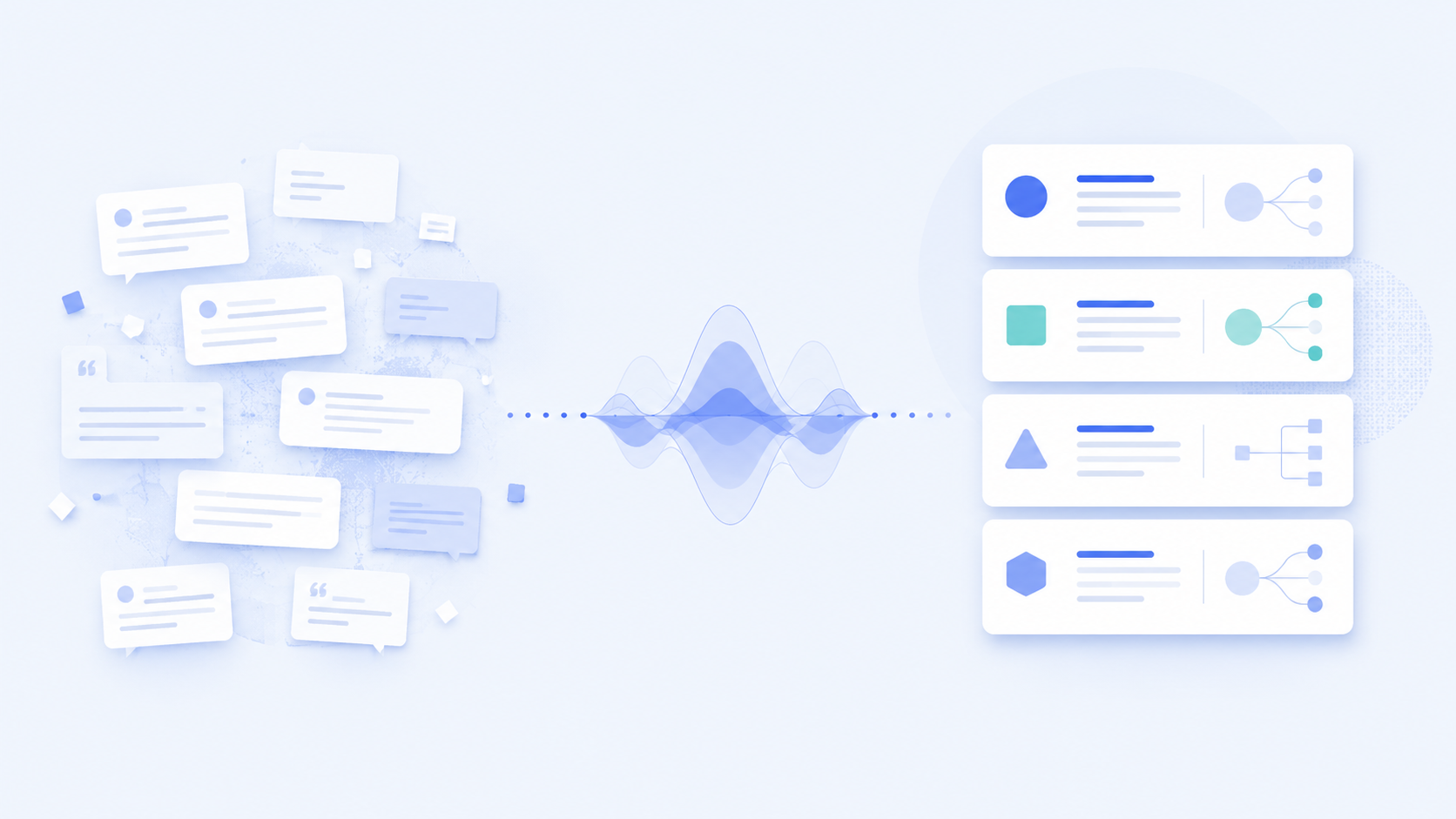
The Umi workflow moves from interview creation to listening, synthesis, analytics, and recommended actions. The point is not just to collect more voice. The point is to convert voice into executive-ready intelligence.
How to Evaluate Listen Labs Competitors Without Getting Lost in Features
When evaluating Listen Labs competitors, do not start with the logo grid. Start with the job to be done.
First, decide whether the audience is recruited consumers, product users, internal employees, frontline teams, customers, guests, or mystery shoppers. Participant recruitment matters, but bringing your own audience may matter more if the signal already lives inside your business.
Second, decide whether you need research outputs or operating recommendations. Highlight reels and visual intelligence can help teams tell the story. A research repository can preserve evidence. But leaders also need automated synthesis that turns patterns into action.
Third, decide whether the workflow fits the environment. Unmoderated usability testing and digital user interviews work well for software flows. Voice-based interviews work better when the audience is moving, working shifts, serving guests, or responding between tasks.
Fourth, review governance. AI research should have clear consent, privacy, and security standards. Teams comparing vendors should understand the NIST AI Risk Management Framework and review FTC guidance on privacy and data security. Arbor’s enterprise security page outlines SOC 2 Type II certification, encryption, monitoring, and compliance controls.
A Quick Market Map Without Making the Article About Everyone Else
Some teams comparing Listen Labs competitors will also see names like Strella, Outset, Conveo, UserTesting, Maze, Dscout, Discuss.io, Great Question, GetWhy, and Qualtrics. The right answer depends on the use case, not the longest feature list.
Choose Arbor when the research question is tied to real-world execution: what customers and employees are experiencing, what the frontline knows, what varies by location, and what leaders should do next.
Why Arbor Is the Better Choice for Frontline Intelligence
Arbor is strongest when the insight already exists inside the business but is trapped in conversations. A guest told the front desk what was confusing. A server heard which menu item people keep asking for. A field technician knows which process step creates repeat work. A store associate sees why loyalty enrollment fails at checkout. A manager knows which training message landed and which one did not.
Traditional qualitative research can uncover some of this, but it is slow to scale. Surveys can collect ratings, but they often flatten context. Dashboards can show variance, but they rarely explain the cause.
Arbor connects the missing layer: real conversations, captured continuously, structured by AI, and synthesized for leaders.
That is the reason Arbor belongs in any serious comparison of Listen Labs alternatives. Arbor is the right choice when the business question depends on the people closest to the work.
Ready to Compare AI Research Platforms Around Your Use Case?
Arbor helps teams run AI-moderated interviews with frontline employees, customers, guests, and mystery shoppers, then turns those conversations into recommendations leaders can act on. For teams evaluating Listen Labs competitors, Arbor offers a clearer path from qualitative research to operational change.
If your team needs consumer panels, product feedback, or UX research only, compare around that workflow. If you need to understand what is happening across locations and why, Arbor is built for that job.
FAQs
Q: When is Arbor a better fit than Listen Labs alternatives?
Arbor is a better fit when the audience includes frontline employees, customers, guests, or mystery shoppers, and when the goal is executive-ready intelligence tied to operations, customer experience, and location-level performance.
Q: Does Arbor replace UX research tools?
Not always. UX research tools are useful for digital product feedback, prototype testing, and usability testing. Arbor is built for frontline intelligence, customer intelligence, and real-world operational insight.