
Hotel Reputation Management: Fix Operational Root Causes
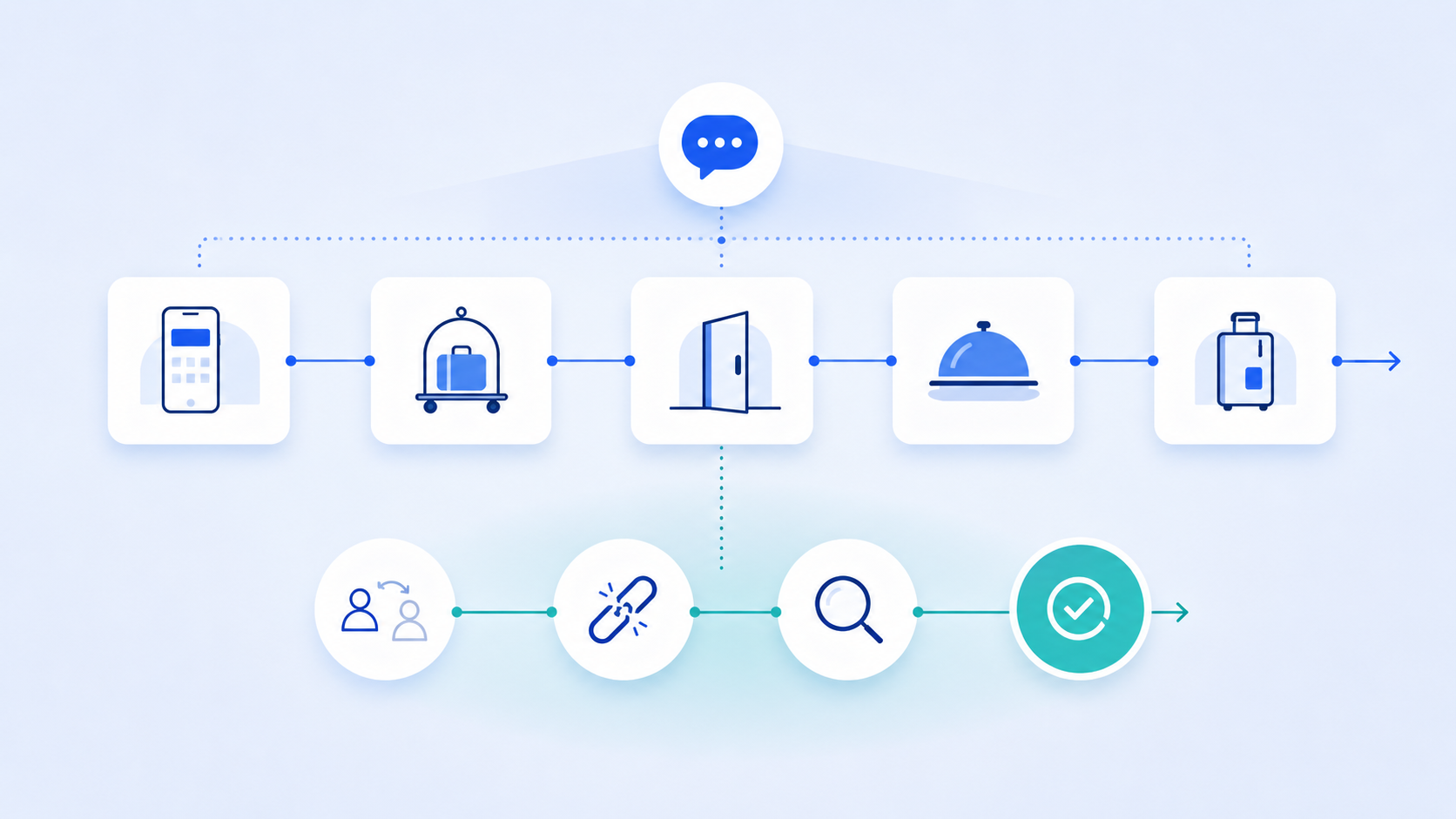
Most hotel reputation management programs begin after checkout. Teams monitor Google reviews, TripAdvisor, Booking.com, Expedia, Yelp, social media, and other review platforms, respond to negative feedback, and report changes in review scores.
That work matters, but the review is only the public record. The guest experienced the problem earlier, somewhere in the guest journey.
A delayed room, an unrecognized preference, a rushed spa appointment, or a slow maintenance response happens on the property. By the time the comment appears, guest satisfaction, customer loyalty, a direct booking, an upsell, or RevPAR may already be at risk.
A stronger reputation strategy has two layers: manage the public conversation and fix the on-property causes creating it.
Quick definition: Hotel reputation management is the process of monitoring and improving how guests perceive a property across review platforms, online travel agencies, social media, direct guest feedback, and the on-property experience.
Reputation Is an Operational Outcome
A hotel’s brand image is formed across the entire guest journey: discovery, booking, arrival, room readiness, dining, amenities, service recovery, and departure. Online reviews compress those touchpoints into a rating and a few paragraphs.
That creates a visibility problem. A property may see repeated comments about “poor service,” but the real cause could be:
- Booking preferences that never reach the front desk
- A property management system that does not surface room status clearly
- Understaffing during a specific arrival window
- A handoff failure between housekeeping and reception
- Slow response to in-room maintenance requests
- Amenities that do not match expectations set on the hotel website or OTAs
Review monitoring identifies the symptom; operational listening connects it to a property, shift, system, or handoff and produces actionable insights for the hospitality industry.
Why Traditional Hotel Reputation Management Tools Are Incomplete
Hotel reputation management software is effective at aggregating mentions, tracking guest sentiment, and helping teams respond across online travel agencies and social media. Many hotel reputation management tools also provide response templates, competitor benchmarks, and alerts.
The limitation is not the software. It is the source data. A reputation management system can organize what guests posted, but it cannot recover the context they never included.
Three structural gaps remain:
1. Online Reviews Represent a Narrow Sample
Guests who post are often especially delighted or frustrated. The quiet middle—guests whose experience was acceptable but contained fixable friction—rarely writes a detailed review. This makes review trends valuable but incomplete.
2. Review Data Arrives After Revenue Is at Risk
By the time a negative review appears, the stay is over. The property may have lost an upsell, a repeat booking, a direct booking, or a loyalty relationship. Review response is necessary service recovery, but it is not prevention.
3. Review Themes Are Too Broad for Action
Sentiment analysis may show that “service” is declining. Property leaders still need to know which service moment, which shift, which property, and which operational handoff is responsible.
Build a Reputation Intelligence System
Review management is the communications layer: monitor mentions, respond to online reviews, and protect the public record. Reputation management is the operating layer: identify the guest touchpoint, root cause, owner, and business outcome behind the trend.
A stronger approach connects public reputation data with direct guest feedback, property operations, and frontline conversations.
Step 1: Map the Guest Touchpoints That Shape Reviews
Start with the moments guests are most likely to mention:
- Search and booking conversion
- Pre-arrival communication and post-stay emails
- Check-in and room readiness
- Room cleanliness, comfort, and maintenance
- Food and beverage
- Spa, pool, fitness, and concierge
- Service recovery and checkout
Connect each touchpoint to an owner and a system, such as the PMS, CRM, channel manager, guest messaging tool, or customer relationship management workflow.
Step 2: Segment Review Trends Operationally
Do not stop at property-level averages. Segment by:
- Property and region
- Weekday versus weekend
- Arrival window or shift
- Guest segment and stay purpose
- Booking source, including OTAs and direct bookings
- Room type or rate tier
- Touchpoint and issue severity
This is especially important for boutique hotels, where a small number of comments can materially affect guest sentiment and conversion rates.
Step 3: Ask for the Story Behind the Score
Pair structured ratings with conversational follow-ups. Ask what drove the answer, what the guest expected, what happened next, and what would have changed the outcome.
Voice-based feedback can make this easier because guests can describe an experience naturally rather than typing into a small text box. Arbor’s product is designed to conduct and analyze frontline and guest conversations, preserving the nuance behind the rating.
Step 4: Listen to the Frontline
Front desk agents, housekeepers, servers, concierge teams, and property managers see recurring friction before it becomes visible in online reviews. Ask them:
- Which guest complaints repeat every week?
- Where do booking promises fail to reach the property?
- Which workarounds are staff using?
- What causes delays during peak periods?
- Which upsell opportunities are missed, and why?
Arbor’s guide to how frontline teams decode what customers actually need explains why these observations are a critical customer intelligence source.
Step 5: Connect Insight to Action
Each material reputation issue should produce:
- A clearly defined root cause
- The properties, shifts, and guest segments affected
- A named action owner
- A deadline and expected outcome
- A leading indicator and a lagging indicator
For example, a hotel may track room-ready accuracy and check-in wait time as leading indicators, then monitor review scores, occupancy, ADR, RevPAR, customer loyalty, and repeat bookings as lagging outcomes.
A Practical Hotel Reputation Management Operating Cadence
Daily: Detect and Recover
Review new online reviews, direct guest feedback, and service incidents. Respond quickly, escalate serious problems, and recover the individual guest relationship where possible.
Weekly: Diagnose Patterns
Combine review monitoring with guest interviews and frontline feedback. Identify recurring causes by property and shift. Separate one-off complaints from systemic issues.
Monthly: Prioritize Fixes
Rank issues by guest impact, frequency, revenue exposure, and ease of correction. Assign cross-functional work involving operations, technology, training, or facilities.
Quarterly: Measure Reputation and Revenue Together
Evaluate whether fixes changed guest satisfaction, booking conversion, direct bookings, occupancy, ADR, RevPAR, and customer loyalty. This prevents reputation from becoming a marketing-only metric.
Example: A Reservation-to-Arrival Handoff Gap
Imagine review scores falling at four properties. Online reviews mention “not feeling recognized,” “room not ready,” and “special request ignored.” A conventional reputation management workflow might create response templates and coaching guidance.
A root-cause investigation could reveal that preferences captured during booking are stored in the CRM but not visible in the property management system used at arrival. The front desk team is apologizing for a data-flow failure it did not create.
The right action is not better wording in review responses. It is a corrected CRM-to-PMS handoff, a temporary arrival checklist, and monitoring of preference fulfillment by property.
That is the difference between managing reviews and managing reputation.
How the Major Channels Fit Together
A complete system can include TripAdvisor, Google reviews, Booking.com, Expedia, Yelp, social media, guest surveys, post-stay emails, and direct conversations. It can also incorporate data from GuestRevu, Revinate, TrustYou, or another review monitoring and guest engagement platform.
The point is not to replace every existing tool. It is to connect them to a deeper operating question: What happened on the property that caused this pattern, and what should we change?
A hotel website and OTAs shape expectations before arrival. The channel manager and booking engine influence availability and booking conversion. The PMS and CRM shape execution. Frontline teams recover gaps in real time. The reputation program should connect this chain rather than optimize each system in isolation.
Metrics That Make Reputation Commercially Useful
Track a balanced scorecard:
Public reputation metrics
- Review scores and volume
- Response time and response rate
- Guest sentiment by theme
- Share of negative feedback resolved
Operational metrics
- Room-ready accuracy
- Check-in wait time
- Maintenance resolution time
- Preference fulfillment
- Service recovery time
Commercial metrics
- Occupancy
- ADR
- RevPAR
- Direct bookings
- Booking conversion and conversion rates
- Repeat bookings and customer loyalty
The goal is not to claim that every review-point increase directly causes a fixed revenue gain. It is to test whether specific operational improvements move both experience and commercial outcomes in the same direction.
Move Beyond Monitoring
Effective hotel reputation management connects review monitoring, guest feedback, frontline conversations, property operations, and commercial metrics in one continuous loop. The team detects reputation risk, traces it to a guest touchpoint, assigns the operational fix, and measures whether guest satisfaction, customer loyalty, and revenue improve.
Arbor helps hotel groups hear from mystery shoppers, guests, and frontline employees through AI-moderated voice interviews, then turns those conversations into themes, root causes, evidence, and prioritized recommendations. Read more about closing the operational intelligence gap or contact Arbor to explore a property-level listening program.
Hotel Reputation Management FAQ
Q: What Is Hotel Reputation Management?
Hotel reputation management is the process of monitoring, influencing, and improving how guests perceive a hotel across review platforms, online travel agencies, social media, and direct feedback channels.
Q: What Is the Difference Between Review Management and Reputation Management?
Review management focuses on monitoring and responding to online reviews. Reputation management also addresses the operational causes behind those reviews and measures the effect on guest experience and revenue.
Q: Can a Hotel Improve Reputation Without Replacing Its Current Software?
Yes. Most hotel groups can keep their existing review platforms, CRM, PMS, and guest engagement tools. The higher-value change is connecting those sources to direct guest and frontline conversations so leaders can diagnose root causes.