
Field Audit Software: Fix Execution Gaps
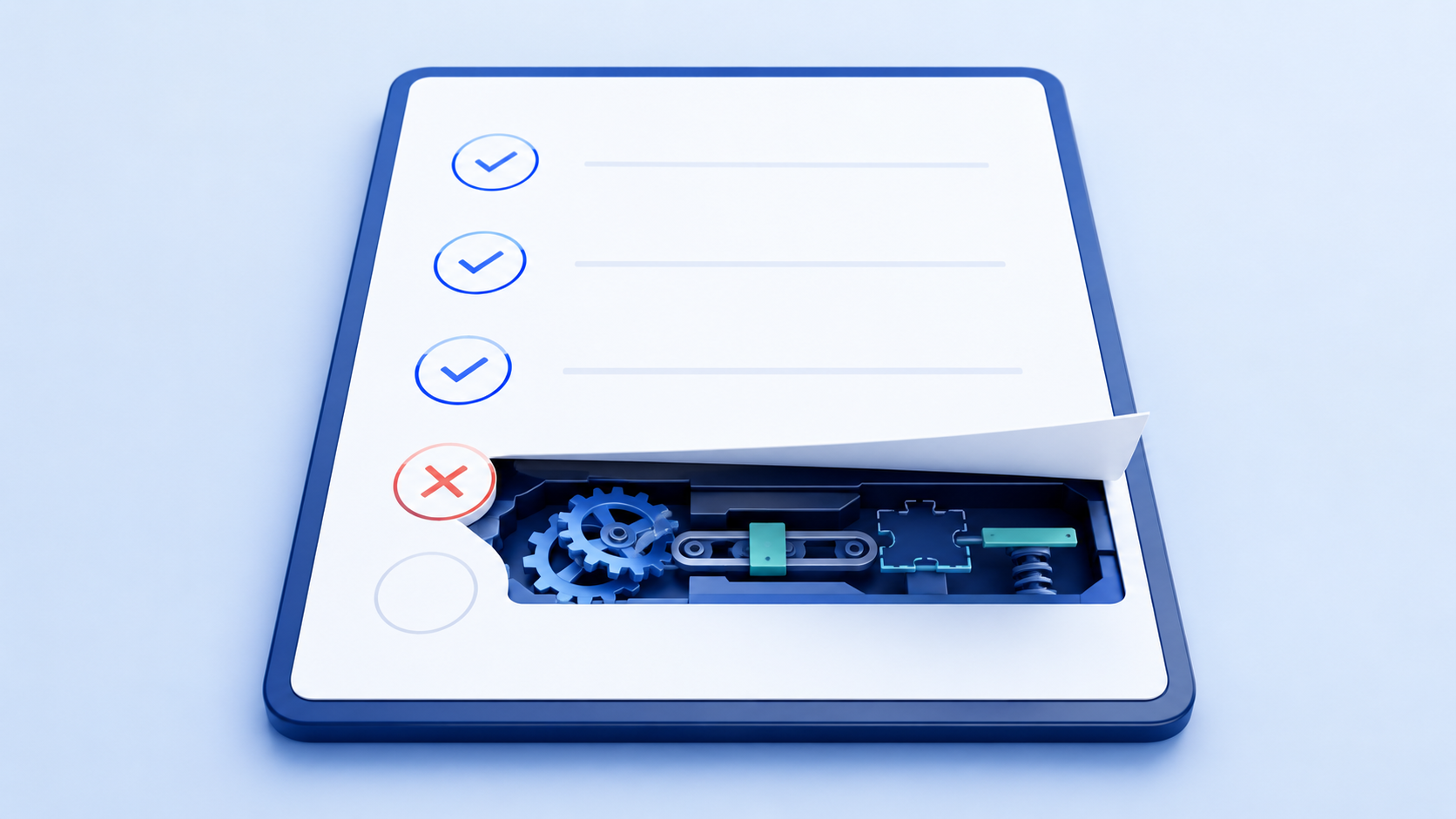
Field audits answer an essential operating question: did this location meet the standard? Modern field audit software replaces paper forms with digital checklists, standardizes evidence collection, creates audit trails, and helps teams assign corrective actions faster across distributed field operations while supporting regulatory compliance.
But a failed checklist item identifies a gap, not necessarily its cause. The next question should be: why does the same failure keep coming back?
What Is Field Audit Software?
Field audit software is a system for planning, conducting, documenting, and following up on inspections performed outside a central office. Common use cases include store audits, restaurant inspections, safety checks, quality audits, equipment inspections, retail execution reviews, and compliance inspections.
A typical platform supports configurable audit templates, mobile audits, photo capture, timestamps, scoring, e-signatures, and real-time reporting. A manager can complete mobile inspections from a mobile device, attach evidence, flag a problem, and route the issue to an owner without waiting for forms to be rekeyed later.
What Field Audit Software Does Better Than Manual Audits
Field audit software improves consistency, documentation, and follow-through. Digital checklists help auditors use the same criteria, while conditional logic adapts questions to the location or response. Photos, notes, audit trails, and e-signatures strengthen documentation for compliance checks and regulatory requirements. Strong systems also route corrective actions to owners and make recurring failures visible across locations. This aligns with the broader principles in management-system auditing: effective audits depend on a consistent program, evidence, and follow-up rather than a one-time inspection.
For multi-location operators, the biggest gain is comparison. Leaders can see whether a missed standard is isolated to one store or part of a larger pattern across a region, manager group, shift, or format.
The Limitation of Checklist-Based Field Audits
A checklist tells you that a condition was observed. It does not always tell you why it happened.
Suppose five restaurants fail the same closing-standard item. The score looks identical, but one site may lack training, another may have broken equipment, and another may be understaffed.
If leaders respond to every failure with the same retraining module, they may be treating symptoms instead of causes. This is the same reason business process analysis is most useful when it compares the documented process with how work is actually performed.
Why the Same Audit Failure Keeps Returning
Recurring failures usually point to a system problem, not simply a careless employee. The root cause may be a training problem, a process-design problem, a resource constraint, a communication gap, a manager-enforcement gap, or a local operating condition.
Safety programs offer a useful model. OSHA recommends reviewing inspection and compliance-audit results, checking whether controls remain effective, and addressing issues in ways that prevent them from recurring rather than simply correcting the immediate problem. Its guidance on program evaluation and improvement also highlights the value of involving workers in identifying weaknesses and opportunities to improve.
That principle applies beyond safety. Repeated corrective actions without root-cause context can become administrative churn and leave compliance gaps unresolved.
Add Conversational Follow-Up to Field Audits
A stronger workflow pairs audit data with targeted conversations:
- The field audit identifies a recurring execution gap.
- Leaders isolate the affected locations, shifts, roles, or managers.
- Frontline employees and managers are asked about the most recent example.
- Their explanations are compared for recurring causes and workarounds.
- The organization decides whether the fix belongs in training, staffing, technology, equipment, or the process itself.
- The next audit cycle checks whether the intervention actually worked.
This is where frontline intelligence extends the value of an audit. The score shows where to look; the conversation explains what the score cannot.
How to Compare Field Audit Results Across Locations
Do not treat every failed item as equally meaningful. Segment results by location, region, manager, shift, store format, tenure, and operating condition. Then separate isolated exceptions from systemic patterns.
A risk assessment can help prioritize what deserves immediate attention. A severe safety or compliance gap may require rapid escalation even if it appears once. A lower-severity issue may deserve process redesign if it appears in 40% of locations.
For restaurant and retail programs, structured inspections often combine self-assessments, verification audits, and gap analysis to keep standards consistent across locations, an approach reflected in the FDA’s Retail Food Regulatory Program Standards.
How to Turn Audit Findings Into Corrective Action
A useful corrective-action record should capture what failed, why it failed, severity, frequency, affected locations, the owner, the intervention, the deadline, and how success will be measured. A broken-equipment problem needs a different fix from unclear expectations or a bad process.
The best programs connect audit findings to continuous improvement, so the organization can test a fix, measure the outcome, and standardize what works.
What to Look for in Field Audit Software
Prioritize mobile usability and a reliable app that field teams can use without friction. Look for configurable templates, evidence capture, location segmentation, automated routing, and corrective-action workflows. Offline functionality is especially important in low-connectivity environments, where photos, notes, and timestamps should be preserved until the device reconnects.
Also confirm that the platform supports the audit you actually run. Operational field audit software is not the same as internal audit software used for financial statements, workpapers, controls testing, and formal assurance. An internal audit team assessing controls will have different evidence and documentation needs than a district manager conducting an operational inspection. Quality audits can carry different requirements again. The system should fit the job.
From Field Audits to Continuous Operational Intelligence
Field audit software is valuable because it creates consistent visibility across distributed locations. But an inspection program becomes more powerful when leaders can connect a failed standard to the operating reality behind it.
Arbor is designed to add that qualitative layer. Structured AI-led conversations can ask managers and frontline employees what happened, probe for the reason, and synthesize recurring causes across locations. That gives operations leaders a way to move from “this item failed again” to “this is the upstream condition we need to change.”
Final Thoughts
A checklist can tell you a standard was missed. Better field audit software can document the miss, route the issue, and track corrective actions. Improving execution, however, requires understanding why the miss happened and whether the same cause exists elsewhere.
The most useful audit program does both: measure the standard consistently and investigate the recurring gaps deeply enough to fix the system behind them.
FAQs
Q: What is field audit software used for?
Field audit software digitizes inspections across distributed locations. Teams use it for store audits, safety checks, restaurant inspections, retail execution, equipment reviews, quality audits, and operational compliance.
Q: Can field audit software work without internet access?
Many platforms support offline functionality so an auditor can complete an inspection on a mobile device and sync the results later. Buyers should confirm exactly which features remain available offline.
Q: How are mobile audits different from paper audits?
Mobile audits can standardize questions, capture photos and timestamps, create audit trails, route corrective actions, and support faster reporting without re-entering paper forms.
Q: Why do audit failures keep repeating after corrective action?
The action may be addressing the visible failure rather than the cause. Recurring failures often require deeper investigation into training, staffing, equipment, process design, communication, or local operating conditions.