
Choose Qualitative Research Software for Decisions
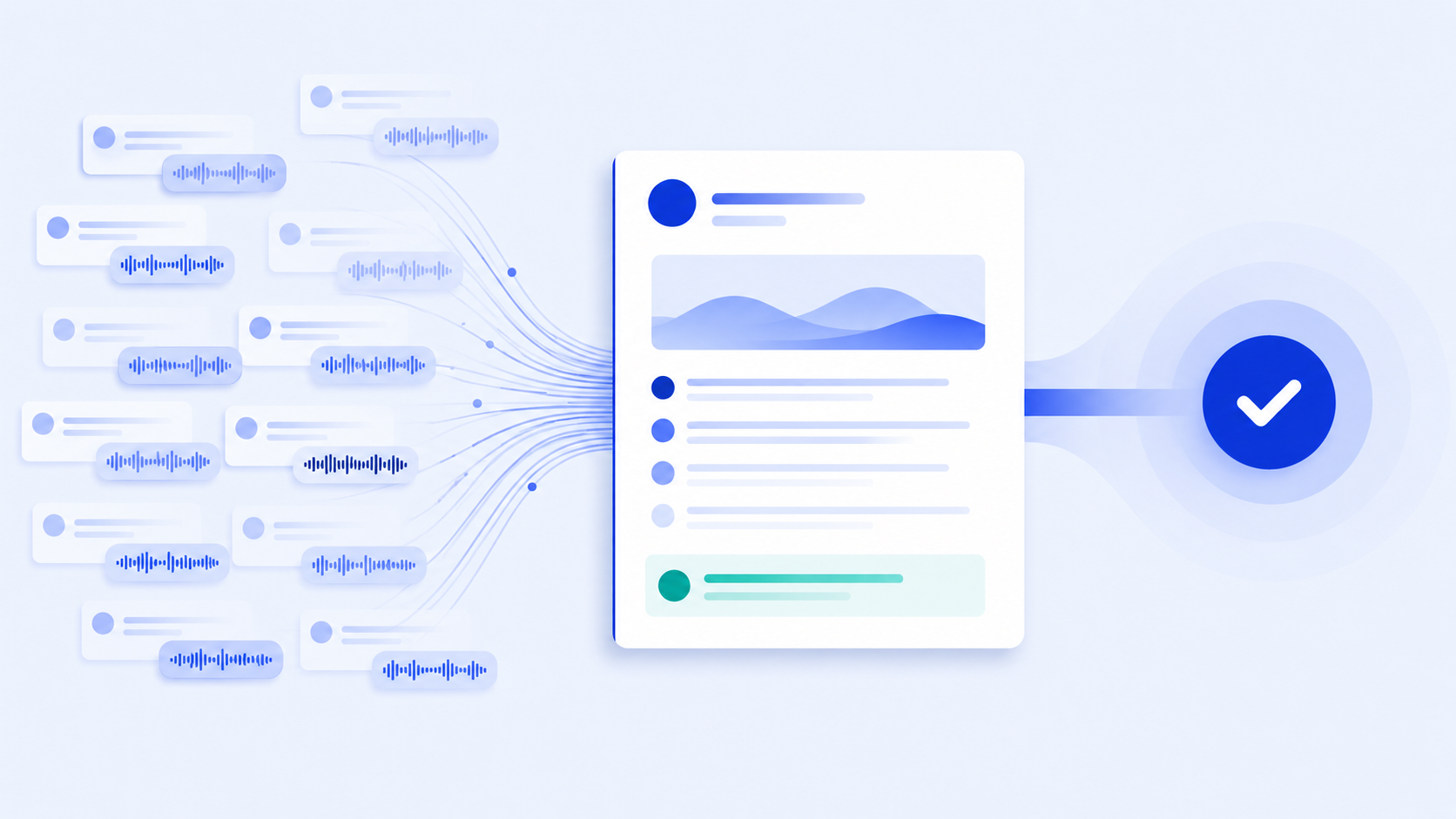
Qualitative research software has traditionally been built for researchers who need to organize, code, analyze, and interpret open-ended data. Tools like NVivo, ATLAS.ti, MAXQDA, Dedoose, Quirkos, Taguette, Delve, and QualCoder help teams manage transcripts, build a codebook, write memos, conduct thematic analysis, and support qualitative research methods across academic, nonprofit, and enterprise settings.
Those capabilities still matter. But many business teams now need something different from qualitative software.
They do not only need to code interviews. They need to make decisions from them.
A VP of Operations wants to know why a rollout is failing in some locations. A customer experience leader wants to know what is creating friction in the guest journey. A product team wants to understand which concept testing feedback signals true purchase intent. An insights leader wants to deliver executive-ready recommendations without spending weeks manually reviewing transcripts.
That shift changes how teams should evaluate qualitative research software.
Start With the Decision, Not the Data Type
The first question is not “Which QDA software has the most coding features?” It is “What business decision will this research support?”
If the output is an academic paper, a traditional QDA tool or CAQDAS platform may be the right fit. If the output is a board-ready readout, a rollout decision, a guest experience improvement plan, or a prioritized list of operational fixes, the platform needs to do more than support coding.
Business-oriented qualitative research software should help teams:
- Design better interviews
- Capture customer feedback, employee feedback, or frontline feedback at scale
- Analyze open-ended responses quickly
- Preserve quotes and context
- Identify themes, root causes, and patterns
- Translate findings into recommendations
- Share outputs with stakeholders who are not researchers
The platform should move from raw conversation to usable intelligence.
Traditional QDA Tools vs. Business Decision Platforms
Traditional qualitative data analysis software is strongest when a researcher needs control over analysis. A team can import transcripts, create codes, tag passages, compare segments, query coded data, and build evidence for a research question.
That workflow is powerful. It is also labor-intensive.
For business teams, the bottleneck is often not whether they can analyze qualitative data. It is whether they can do it fast enough to influence a decision. A restaurant chain testing a new service model cannot wait three months to learn that the host stand layout is creating the issue. A hotel group cannot wait until the next quarterly review to understand why guests praise check-in but criticize spa booking.
That is why many teams are looking for platforms that combine AI-moderated interviews, text analysis, autocoding, sentiment analysis, and human validation with executive reporting.
The Core Capabilities to Evaluate
Research Design Support
Good qualitative research starts before the interview. The platform should help teams translate a business question into a strong research design.
Look for support around question development, audience definition, segmentation, interview length, privacy, consent, and follow-up logic. The best tools do not just collect responses. They help you ask better questions.
Data Collection Across Real-World Audiences
Some qualitative tools assume the data already exists. Business teams often need to collect it.
If your audience is desk-based, email surveys or scheduled interviews may work. If your audience is frontline employees, retail associates, hotel staff, restaurant teams, drivers, field technicians, or customers in the moment, the platform needs to support mobile, voice, QR code, SMS, and multilingual participation.
Operating system compatibility can matter too. Some open-source or desktop tools work well on Linux, Windows, or macOS, but that does not mean they fit a mobile-first frontline workflow.
Analysis and Thematic Structure
Most teams need more than word clouds. Word clouds can show frequently used terms, but they rarely explain causality.
Evaluate whether the platform supports thematic analysis, content analysis, text mining, querying, sentiment analysis, and clustering by location, role, segment, touchpoint, or time period. Ask whether autocoding is transparent enough to trust and flexible enough to adapt to your research question.
Also ask how the system handles mixed methods research. Many business decisions require both quantitative ratings and qualitative reasoning. A rating shows where the issue is. The explanation shows why.
Evidence, Quotes, and Auditability
A recommendation is only useful if stakeholders trust it. The platform should preserve the evidence behind every insight: transcripts, excerpts, quotes, counts, themes, and source segments.
This is where many AI tools fall short. They summarize quickly, but they do not always show the path from response to recommendation. Strong qualitative research software should let users inspect the underlying data management layer and validate the synthesis.
Human Validation
AI can make qualitative analysis faster, but human judgment still matters. The platform should allow researchers or operations teams to review, refine, and approve themes before they are delivered to leadership.
This is especially important when findings influence staffing, training, customer experience, or strategic investment decisions. Leaders need speed, but not at the cost of rigor.
Visualization Tools and Reporting
Business stakeholders need outputs they can use. That might mean dashboards, executive summaries, slide-ready charts, quote libraries, location comparisons, or prioritized action lists.
Visualization tools should clarify the story, not bury leaders in charts. The best outputs answer: what did we learn, why does it matter, what evidence supports it, and what should we do next?
Where Tools Like NVivo, ATLAS.ti, MAXQDA, and Dedoose Fit
Traditional QDA tools remain strong for manual or researcher-led analysis. NVivo, ATLAS.ti, MAXQDA, Dedoose, Quirkos, Taguette, Delve, and QualCoder can be valuable when teams need deep control over coding, grounded theory workflows, memos, comparative analysis, and codebook development.
They are especially useful for academic research, social science projects, long-form interview studies, and research teams with dedicated analysts.
But they are not always built for business operators who need continuous insight from distributed teams. They may not handle participant recruitment, voice interviews, real-time follow-up questions, executive-ready recommendations, or operational implementation workflows.
The right choice depends on whether your primary need is analysis control or business action.
Where Survey Platforms and Experience Platforms Fit
Survey platforms such as Qualtrics and SurveyMonkey are useful when teams need structured data at scale. They can support customer feedback programs, employee engagement, NPS, brand tracking, and quantitative research.
Some teams also use SPSS or other statistical analysis tools when they need deeper quantitative modeling.
The limitation is that surveys and statistical tools often struggle with rich conversational nuance. They can collect open-ended responses, but the depth depends on how much people type and how well the platform can interpret the response. For complex operational or customer experience questions, that depth may not be enough.
When to Choose AI-Moderated Qualitative Research Software
AI-moderated qualitative research software is a strong fit when teams need both scale and depth.
It is especially useful when:
- The audience is hard to schedule for live interviews
- The topic requires follow-up questions
- The business needs answers quickly
- Open-ended responses are more valuable than scores alone
- Insights need to be compared across locations, segments, or roles
- Leaders need recommendations, not just transcripts
For example, a hotel group might use AI-moderated interviews to understand the guest journey across check-in, room, dining, spa, and amenities. A restaurant chain might use them to measure whether a guest experience playbook has become habit. A retail team might use them to understand why loyalty enrollment varies by store.
A Simple Buying Framework
When evaluating qualitative research software, score each platform on five questions.
First, can it collect the right data from the right audience? A platform that works for panel research may not work for frontline teams.
Second, can it produce depth? The system should ask follow-up questions, capture nuance, and preserve context.
Third, can it synthesize without hiding the evidence? You should see the themes and the quotes behind them.
Fourth, can it support the decision timeline? If the business needs an answer next week, a six-week manual coding workflow may be too slow.
Fifth, can it produce executive-ready outputs? The final deliverable should help leaders act.
How Arbor Fits
Arbor is built for business teams that need qualitative research to become operational and strategic intelligence. It captures AI-led conversations with frontline employees, customers, guests, and mystery shoppers, then synthesizes them into themes, root causes, quotes, dashboards, and recommendations.
That makes Arbor different from a traditional QDA tool and different from a survey-only platform. It is designed for real-world insight: the conversations happening in stores, restaurants, hotels, field teams, and distributed operations where customer experience is made or lost.
If your team already has a research stack, Arbor can complement it by capturing the qualitative depth that structured surveys and static dashboards miss.
The Bottom Line
Qualitative research software is no longer just about organizing transcripts. For business teams, the real value is turning conversation into decisions.
Choose a traditional QDA tool when your team needs detailed coding control. Choose a survey or experience platform when structured measurement is the priority. Choose an AI-moderated research platform when you need scalable conversations, fast synthesis, and executive-ready recommendations.
Book a demo with Arbor to see how AI-led qualitative research can turn customer and frontline conversations into business intelligence.