
Anonymous Employee Surveys: Why Operators Need More
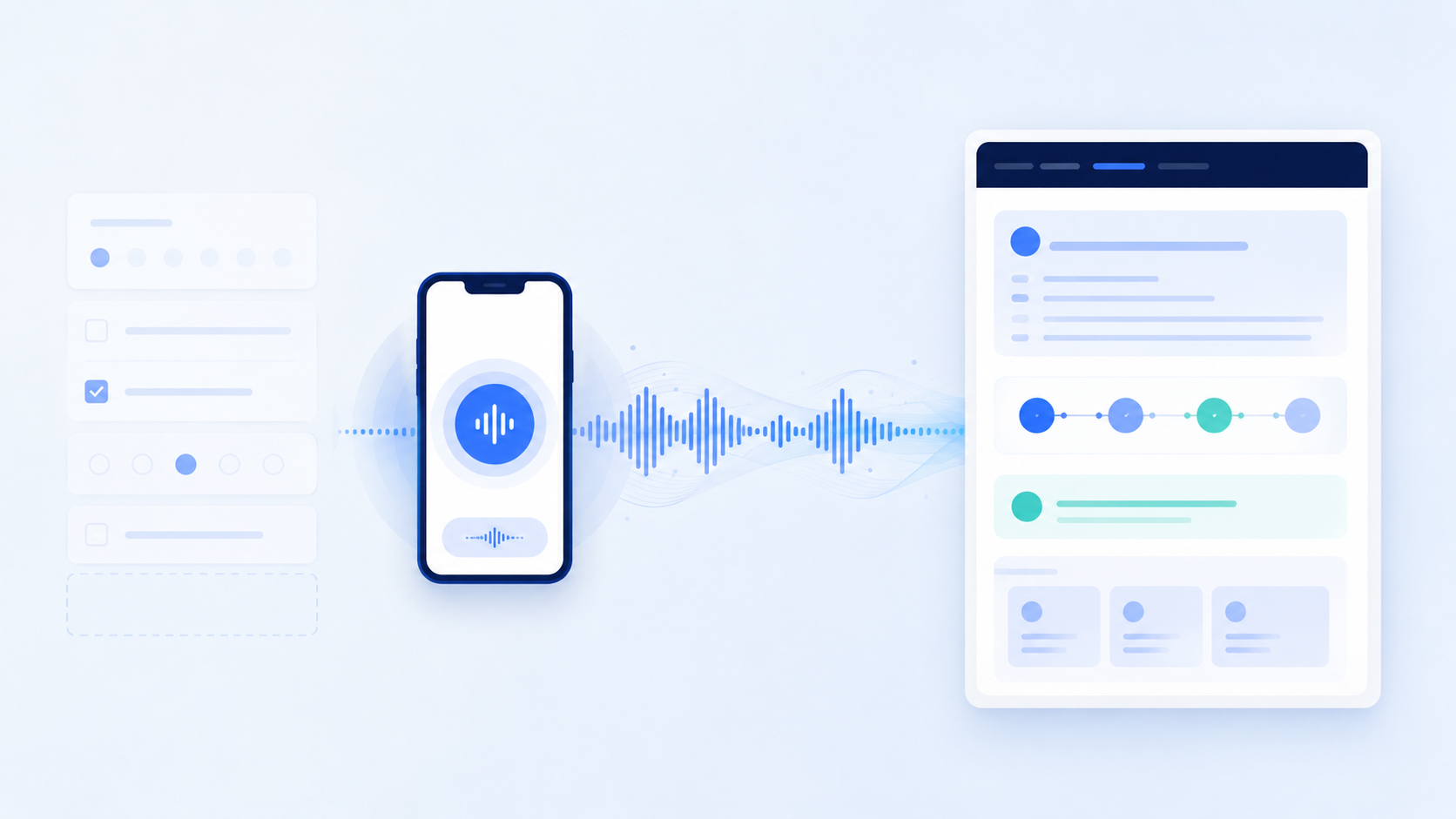
Employee surveys help leaders hear from people who may not speak openly in a meeting or manager check-in. They are useful for sensitive topics like manager trust, burnout, grievances, psychological safety, and work-life balance.
They also support the classic employee engagement survey motion. A company can ask rating scales, multiple-choice questions, eNPS, NPS, and open-ended prompts to benchmark morale over time. Teams may run an employee satisfaction survey in SurveyMonkey, Qualtrics, or another platform, then compare results against past benchmarks.
That work matters. But distributed operators need more than a broad read on employee experience. They need to know what is happening inside each restaurant, hotel, store, branch, warehouse, or call center.
This format can show that sentiment is down. It rarely explains which process broke, which location is struggling, or which fix should become the action plan.
Where They Fall Short for Operators
The problem is not anonymity. The problem is that many confidential surveys were designed for HR reporting, not operational diagnosis.
Operators do not only need to know whether team members feel supported. They need to know why a service model breaks during rush periods, why booking preferences miss the front desk, or why the loyalty prompt is skipped at checkout.
Traditional confidential surveys miss that layer for four reasons.
First, they capture sentiment without context. A low tools score is a signal, but it does not show whether the issue is training, staffing, equipment, access controls, or manager reinforcement.
Second, confidential surveys are usually episodic. Quarterly pulse surveys and annual engagement studies move too slowly for live service environments. A menu launch, hotel standard, staffing model, or POS workflow can fail within days.
Third, the data often sits in the wrong system. HR owns employee engagement survey data. CX owns customer surveys. Operations owns execution. In organizations where work is already overly complex and inefficient, feedback becomes even harder to turn into action without segmentation by role, location, region, tenure, and shift.
Fourth, anonymous comments can be difficult to route. A complaint about “the system” might belong to IT, operations, training, staffing, or a local manager. The result is a pile of feedback, not an operating decision.
What Operators Actually Need
Operators need employee feedback that explains where a process breaks, what workarounds employees use, which customer moments are hardest, and which fixes would improve the experience.
It also means connecting feedback to outcomes like repeat visits, check average, guest satisfaction, NPS, employee retention, safety, and service consistency. Service businesses have long understood that frontline workers and customers are connected sources of performance insight.
That is why the next evolution is not to eliminate surveys. It is to use them for the questions they answer well, then add a deeper layer for operational truth.
From Survey Response to Frontline Intelligence
A stronger model keeps the safety of anonymity while changing the depth of collection.
Start by asking business-outcome questions. Instead of “Do you feel supported?” ask, “What makes the guest journey playbook hard to follow during peak service?” or “Which process would you fix tomorrow if you could?”
Then make participation easy. Many frontline workers do not sit at computers, check email, or have predictable breaks. A web link sent by SMS, QR codes in a break area, mobile-first access, and multilingual voice capture can reach people who might ignore a long form.
Next, use conversation when nuance matters. Forms are efficient for rating scales and quick pulse surveys. Conversations are better when leaders need the story behind the score. An AI-led voice interview can ask a follow-up, clarify what happened, and capture unfiltered feedback in the employee’s own words.
Finally, turn the response into action. Operators need themes, root causes, quotes, severity, and next steps. A useful output does not simply say “communication is poor.” It shows what failed and what would fix it.
This is the shift from survey response collection to operational listening.
That is when feedback becomes intelligence.
Privacy Still Matters
A better frontline listening program still needs trust. Employees should understand what is anonymous, what metadata is collected, and how demographic data is used. Leaders should explain whether personally identifiable information is removed, who can see comments, and how small teams will be protected from accidental identification.
This matters because social desirability bias affects employee feedback. If workers believe their manager can identify them, they may soften the truth or avoid sensitive topics. Strong privacy rules, clear access controls, and transparent communication make employee engagement survey results more credible.
But privacy alone is not enough. People also need proof that leadership is listening.
Closing the Loop Is the Real Participation Strategy
Anonymous employee surveys fail when employees believe feedback disappears into a dashboard.
The simplest way to build trust is to close the loop: “Last month you told us X. Here is what we changed. This month we want to understand Y.” That visible connection makes the next request credible.
When employees see that feedback shaped staffing, training, equipment, scheduling, or customer experience, they become more willing to share specific examples.
How Arbor Helps Operators Go Beyond the Pulse Check
Arbor helps distributed operators capture frontline feedback through AI-led voice interviews and turn it into executive ready intelligence.
Umi, Arbor’s AI researcher, can interview frontline employees, managers, customers, guests, or mystery shoppers through mobile links or QR codes. Conversations can be anonymous, multilingual, and designed around the business question leadership needs to answer.
Arbor then synthesizes conversations into AI-powered insights: recurring issues, customer experience connections, fixable root causes, and prioritized actions.
For operators, this matters because feedback is not trapped in an employee engagement survey, employee satisfaction survey, employee exit surveys, or HR-only report. It becomes part of the operating rhythm and a broader frontline intelligence system.
When a Traditional Survey Is Enough
There are still times when traditional surveys are the right tool.
They work well for broad employee experience measurement, annual culture studies, benefits feedback, broad trend tracking, and employee exit surveys. They are especially useful when the goal is to understand why people leave and how that connects to employee retention.
They are less effective for diagnosing operational issues, rollout execution, or customer experience variance.
The question is not whether anonymous employee surveys are good or bad. The question is whether they match the decision you need to make.
Anonymous Feedback Should Lead to Visible Change
Frontline employees do not need another form that disappears into a dashboard. They need a system that protects candor, captures context, and turns lived experience into decisions.
For operators, that is the real opportunity. A survey can reveal that something is wrong. Frontline intelligence can explain what is wrong, why it keeps happening, and what to do next.
Ready to Turn Employee Feedback Into Operational Intelligence?
Arbor helps operations and customer experience leaders hear from the frontline and turn conversations into decisions. Explore Umi for Operations to see how Arbor goes beyond the anonymous employee survey.
FAQs
Q: Are these surveys still useful?
Yes. They are useful for measuring broad employee experience, surfacing sensitive topics, and giving teams a confidential way to share concerns. They work best when leaders need a broad signal, not an operational diagnosis.
Q: How is a survey different from frontline intelligence?
An anonymous employee survey captures ratings, comments, and trends. Frontline intelligence goes deeper by using conversation to understand the root cause behind a score, then translating that feedback into prioritized actions.
Q: What should operators use beyond pulse checks?
Operators should pair quick surveys with low-friction voice or mobile feedback channels that reach frontline teams in the flow of work. That gives leaders context by location, role, shift, and customer touchpoint.